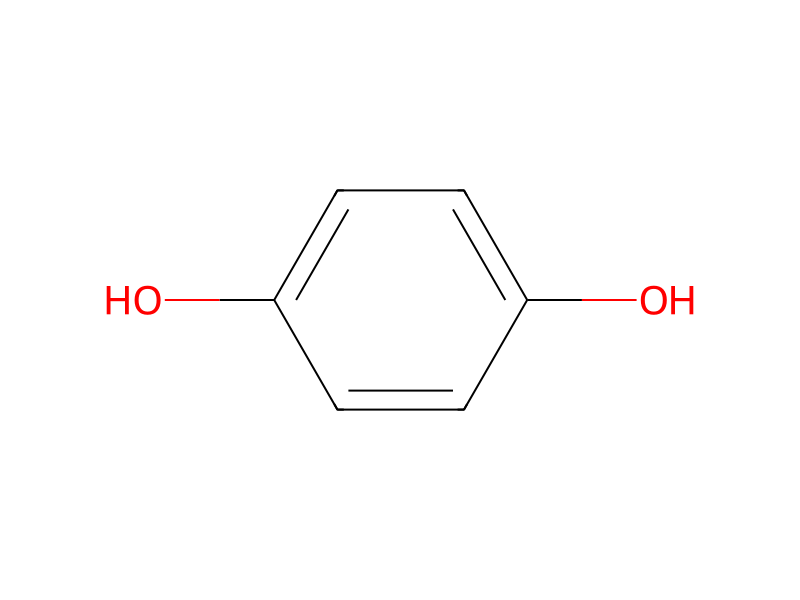
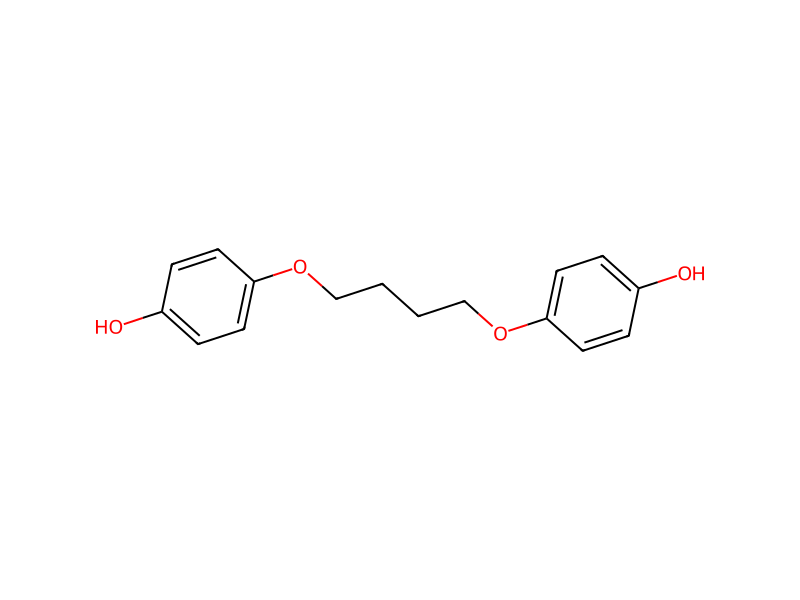
Hydroquinone → 1,4-Bis(4-hydroxyphenoxy)butane
Reaction equation

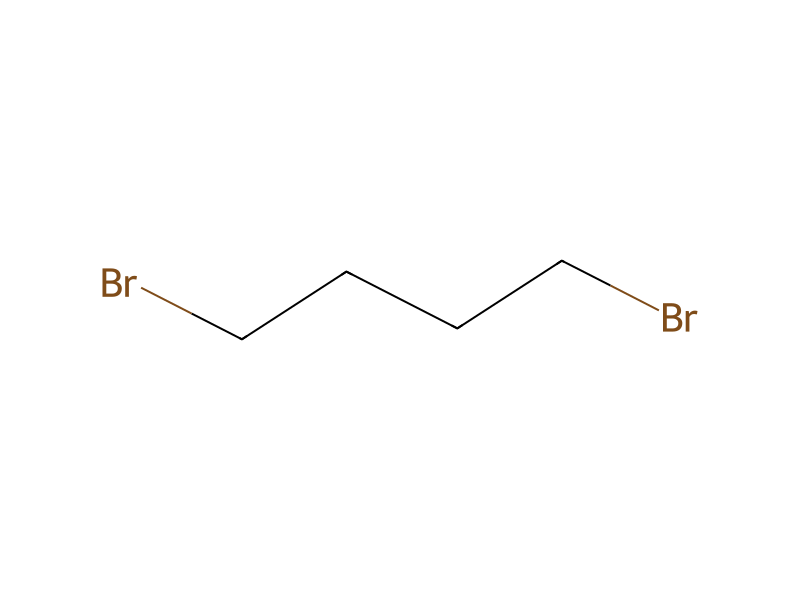
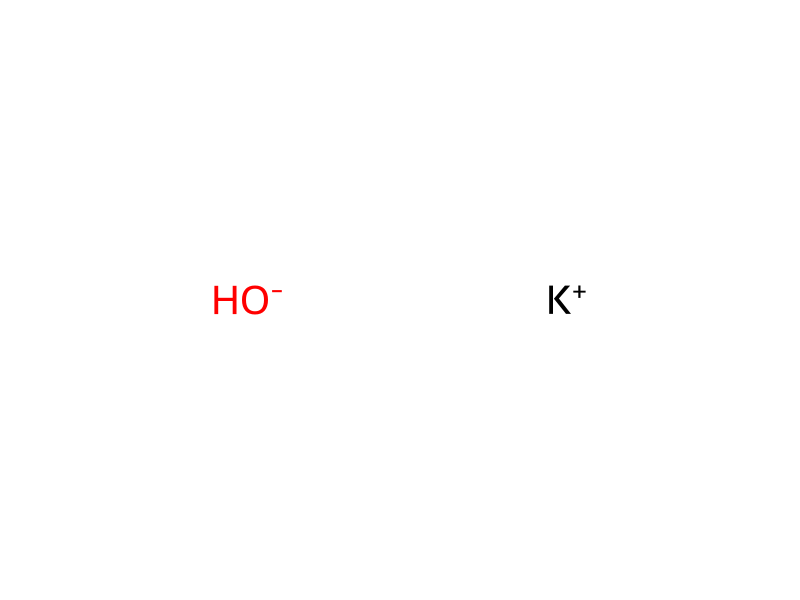
[C:1]1([CH:8]=[CH:7][C:5]([OH:6])=[CH:4][CH:3]=1)[OH:2].Br[CH2:10][CH2:11][CH2:12][CH2:13]Br.[OH-:15].[K+]>O>[OH:2][C:1]1[CH:8]=[CH:7][C:5]([O:6][CH2:10][CH2:11][CH2:12][CH2:13][O:15][C:5]2[CH:7]=[CH:8][C:1]([OH:2])=[CH:3][CH:4]=2)=[CH:4][CH:3]=1Participants
Reactant 3
Product 1
Reagents, catalysts & solvents 1
Procedure
A five neck five liter round bottom flask equipped with a mechanical stirrer, two condensers, and a dropping funnel was purged with nitrogen then charged under a nitrogen blanket with 1.25 kg (11.36 moles) hydroquinone, 350 grams deionized water, and 231.25 grams (1.07 moles) 1,4-dibromobutane. The reaction mass becomes a stirable slurry as it was slowly heated to reflux under a slow nitrogen purge. A solution of 180 grams (2.7 moles) 85 percent KOH pellets in 180 grams water was added dropwise under a nitrogen blanket over a two hour period. After about one third of the KOH had been added, the slurry had converted to a tea colored solution; then, after most of the KOH had been added, a white material precipitates in increasing amounts as the refluxing was continued an additional hour. The reaction mixture was quenched before cooling by pouring into 6 liters deionized water. The water slurry was acidified with 30 percent sulfuric acid and allowed to stand at room temperature overnight before filtering under reduced pressure and washing with several portions of boiling water to remove hydroquinone. The white residue was dried in a vacuum oven at 140° C. to a weight of 240 grams. It was then taken up in 4 liters boiling MEK, treated with decoloring carbon and filtered through a filter aid, celite, to remove particulates and colored impurities. A total of 154 grams of a white product was recovered from a series of filtrates. Analysis by gpc showed contamination by higher molecular weight species which were much less soluble in acetone than the desired product; thus, the product was taken up in boiling acetone, filtered, and cooled to recover 135 grams (46 percent yield based on the dibromobutane). HPLC analysis showed >90 percent purity by peak area. Another crystallization from 3 liters boiling acetone yields 116 grams of white "mica-like" crystals (melting point 202° C.-204° C.) with greater than 96 percent purity by HPLC peak area for use in examples 11 and 22. Both 1H and 13C NMR spectra were consistent with the proposed structure.
Workup
- customA five neck five liter round bottom flask equipped with a mechanical stirrer
- customtwo condensers, and a dropping funnel was purged with nitrogen
- temperaturewas slowly heated
- temperatureto reflux under a slow nitrogen
- custompurge
- customa white material precipitates
- temperaturein increasing amounts as the refluxing
- waitwas continued an additional hour
- customThe reaction mixture was quenched
- temperaturebefore cooling
- additionby pouring into 6 liters
- filtrationbefore filtering under reduced pressure
- washwashing with several portions of boiling water
- customto remove hydroquinone
- customThe white residue was dried in a vacuum oven at 140° C. to a weight of 240 grams
- additiontreated with decoloring carbon
- filtrationfiltered through a filter aid, celite
- customto remove particulates and colored impurities
- customA total of 154 grams of a white product was recovered from a series of filtrates
- filtrationfiltered
- temperaturecooled
- customto recover 135 grams (46 percent yield
- customAnother crystallization from 3 liters
Sources & evidence
- ORD record
- ord-d83df0edda3e4c789c44a5b008118800
- Source dataset
- uspto-grants-1992_09
- Patent number
- US05147905
Reaction notes
Loading…