2,6-Dibromopyridine → 6-Bromo-N-[(4-chlorophenyl)methyl]-2-pyridinamine
Reaction equation

[Cl:1][C:2]1[CH:9]=[CH:8][C:5]([CH2:6][NH2:7])=[CH:4][CH:3]=1.[Br:10][C:11]1[CH:16]=[CH:15][CH:14]=[C:13](Br)[N:12]=1>C(OCC)C>[Br:10][C:11]1[N:12]=[C:13]([NH:7][CH2:6][C:5]2[CH:8]=[CH:9][C:2]([Cl:1])=[CH:3][CH:4]=2)[CH:14]=[CH:15][CH:16]=1Participants
4
Reactant 2
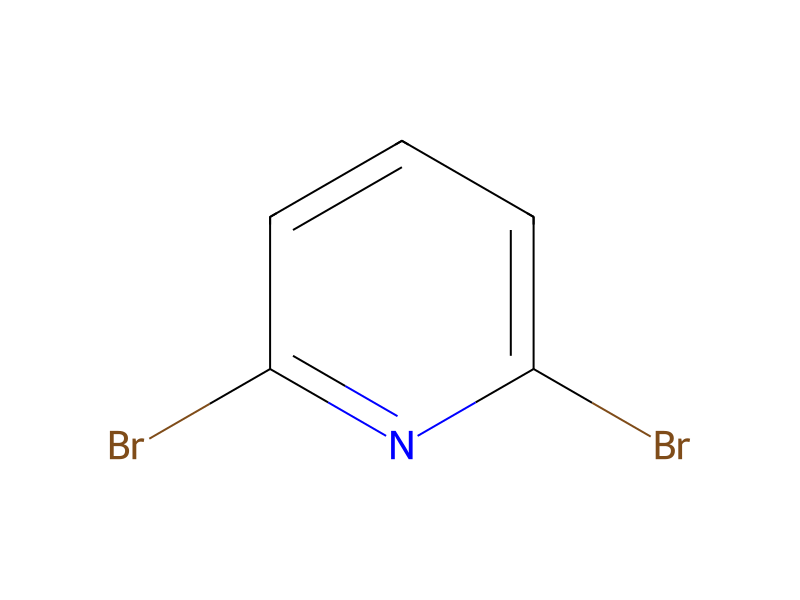

Product 1

Reagents, catalysts & solvents 1

Conditions
- Temperature
- 150 °C
Procedure
A microwave vial was charged with 4-chloro benzylamine (700 mg; 5 mmol; 5 equivalents) and 2,6-dibromo pyridine (238 mg, 1 mmol). The reaction mixture was stirred in the microwave at 150° C. for three times ten minutes (200 W maximum). The reaction mixture was diluted with diethyl ether (50 ml), washed with 10% aqueous citric acid, saturated aqueous sodium bicarbonate and brine. The organic was dried over magnesium sulfate and, after filtration, concentrated in vacuo to afford an oil as the title compound (300 mg, 100% yield). LC/MS: 299 [M+H]
Workup
- washwashed with 10% aqueous citric acid, saturated aqueous sodium bicarbonate and brine
- dry with materialThe organic was dried over magnesium sulfate
- filtrationafter filtration
- concentrationconcentrated in vacuo
Sources & evidence
- ORD record
- ord-988a89491e13474498cef932fd0dafff
- Source dataset
- uspto-grants-2013_08
- Patent number
- US08501446B2
Reaction notes
Loading…