Triethylamine → 2-[4-(Propan-2-yl)piperazin-1-yl]pyrazine
Reaction equation

Cl[C:2]1[CH:7]=[N:6][CH:5]=[CH:4][N:3]=1.C(N(CC)CC)C.[CH:15]([N:18]1[CH2:23][CH2:22][NH:21][CH2:20][CH2:19]1)([CH3:17])[CH3:16]>CC(C)=O>[CH:15]([N:18]1[CH2:23][CH2:22][N:21]([C:2]2[CH:7]=[N:6][CH:5]=[CH:4][N:3]=2)[CH2:20][CH2:19]1)([CH3:17])[CH3:16]Participants
5
Reactant 3


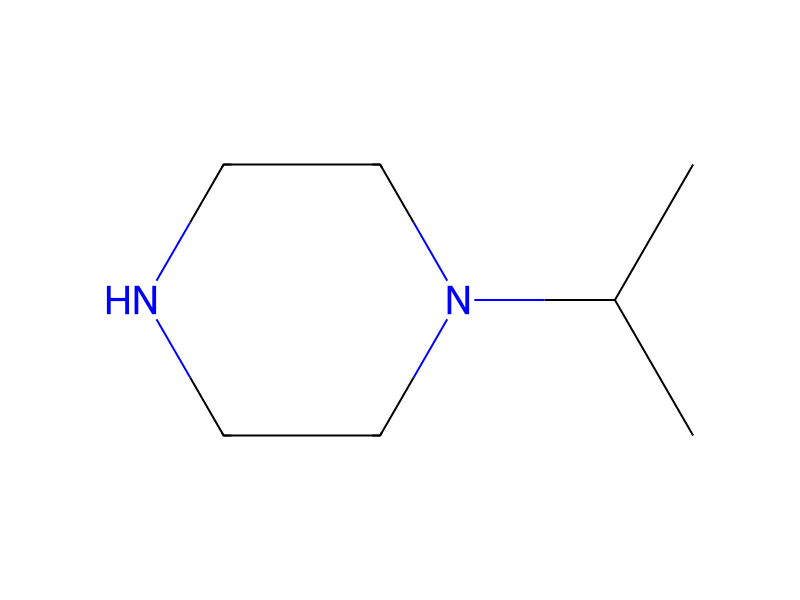
Product 1

Reagents, catalysts & solvents 1

Conditions
- Temperature
- 120 °C
Procedure
Chloropyrazine (2.3 g, 20 mmol) and triethylamine (3 g, 30 mmol) were mixed in acetone (8 mL) in a 20 mL microwave vessel. 1-Isopropylpiperazine (2.8 g, 22 mmol) was added and the reaction mixture was heated for 3300 seconds at 120° C. in a microwave oven. The reaction mixture was evaporated and the residue was purified on a silicagel column with dichloromethane/MeOH (9:1) as eluent. Yield: 1.64 g solid 4-isopropyl-3,4,5,6-tetrahydro-2H-[1,2′]bipyrazinyl.
Workup
- customThe reaction mixture was evaporated
- customthe residue was purified on a silicagel column with dichloromethane/MeOH (9:1) as eluent
Sources & evidence
- ORD record
- ord-366f52929889418481da8fff06554f77
- Source dataset
- uspto-grants-2013_08
- Patent number
- US08501739B2
Reaction notes
Loading…