Potassium Carbonate → 2-Methyl-3-nitropyridine
Reaction equation

Cl[C:2]1[C:7]([N+:8]([O-:10])=[O:9])=[CH:6][CH:5]=[CH:4][N:3]=1.[C:11]([O-])([O-])=O.[K+].[K+]>C1C=CC([P]([Pd]([P](C2C=CC=CC=2)(C2C=CC=CC=2)C2C=CC=CC=2)([P](C2C=CC=CC=2)(C2C=CC=CC=2)C2C=CC=CC=2)[P](C2C=CC=CC=2)(C2C=CC=CC=2)C2C=CC=CC=2)(C2C=CC=CC=2)C2C=CC=CC=2)=CC=1.O1CCOCC1>[CH3:11][C:2]1[C:7]([N+:8]([O-:10])=[O:9])=[CH:6][CH:5]=[CH:4][N:3]=1Participants
5
Reactant 2

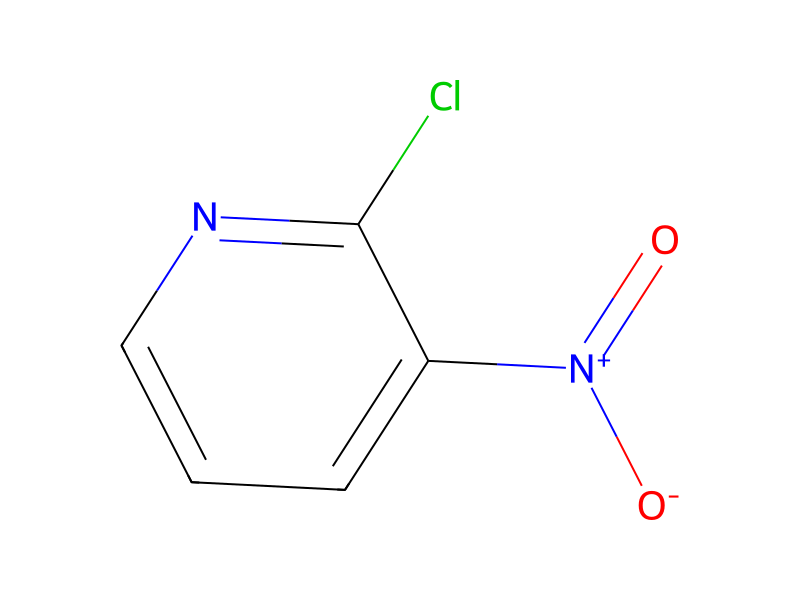
Product 1

Reagents, catalysts & solvents 2


Procedure
The mixture of 2-chloro-3-nitropyridine (50 g, 0.315 mol, 1.0 eq), TMB (50 mL, 1.1 eq), (PPh3)4Pd (O) (36.4 g, 0.1 eq), K2CO3 (130.6 g, 3.0 eq) and dioxane (1500 mL) was refluxed under argon for 2 days. The mixture was cooled to room temperature and filtered through a celite pad to remove K2CO3 and catalyst. The celite pad was washed with EtOAc. The organic solutions were combined and concentrated to get the crude which was purified by silica gel chromatography (0%˜40% EtOAc/Hex) to obtain the desired product 2-methyl-3-nitropyridine (30.5 g, isolated yield 70%) (Note: isolated yield 42% was obtained when the reaction was refluxed for 24 h).
Workup
- temperaturewas refluxed under argon for 2 days
- filtrationfiltered through a celite pad
- customto remove K2CO3 and catalyst
- washThe celite pad was washed with EtOAc
- concentrationconcentrated
- customto get the crude which
- customwas purified by silica gel chromatography (0%˜40% EtOAc/Hex)
Sources & evidence
- ORD record
- ord-4dead94c08ef4248ac9b4d8a83f37836
- Source dataset
- uspto-grants-2013_08
- Patent number
- US08501763B2
Reaction notes
Loading…