Diisopropylethylamine → 4-Nitrophenyl (7-chloro-4-oxo-1-phenyl-1,4-dihydroquinolin-3-yl)methylcarbamate
Reaction equation

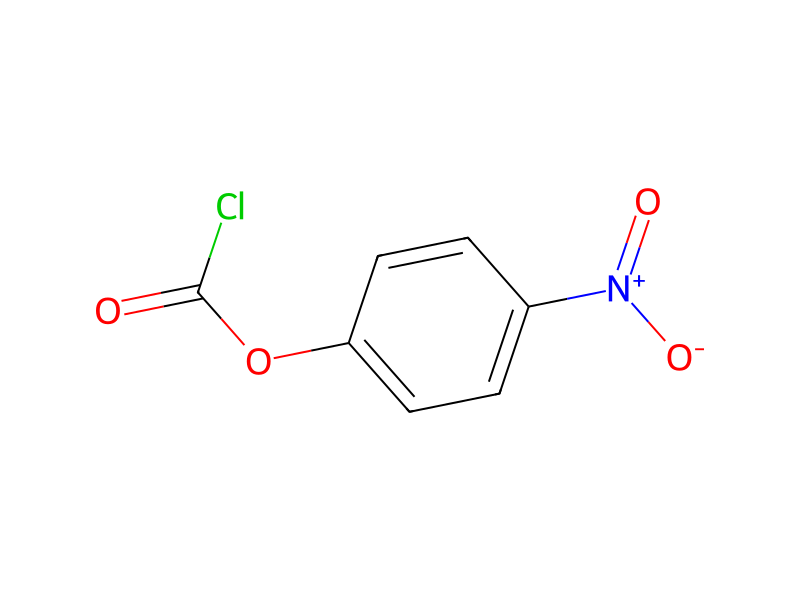
[NH2:1][CH2:2][C:3]1[C:12](=[O:13])[C:11]2[C:6](=[CH:7][C:8]([Cl:14])=[CH:9][CH:10]=2)[N:5]([C:15]2[CH:20]=[CH:19][CH:18]=[CH:17][CH:16]=2)[CH:4]=1.Cl[C:22]([O:24][C:25]1[CH:30]=[CH:29][C:28]([N+:31]([O-:33])=[O:32])=[CH:27][CH:26]=1)=[O:23].C(N(CC)C(C)C)(C)C>C(Cl)Cl>[N+:31]([C:28]1[CH:27]=[CH:26][C:25]([O:24][C:22](=[O:23])[NH:1][CH2:2][C:3]2[C:12](=[O:13])[C:11]3[C:6](=[CH:7][C:8]([Cl:14])=[CH:9][CH:10]=3)[N:5]([C:15]3[CH:16]=[CH:17][CH:18]=[CH:19][CH:20]=3)[CH:4]=2)=[CH:30][CH:29]=1)([O-:33])=[O:32]Participants
5
Reactant 3


Product 1

Reagents, catalysts & solvents 1

Procedure
In a 250 mL round-bottomed flask, 3-(aminomethyl)-7-chloro-1-phenylquinolin-4(1H)-one (intermediate D) (1 g, 3.51 mmol), 4-nitrophenyl chloroformate (708 mg, 3.51 mmol) and N,N-diisopropylethylamine (1.36 g, 1.84 mL, 10.5 mmol) were combined with CH2Cl2 (30 mL). The reaction mixture was stirred overnight at room temperature. After this time, the reaction mixture was concentrated to dryness to afford (7-chloro-4-oxo-1-phenyl-1,4-dihydro-quinolin-3-ylmethyl)-carbamic acid 4-nitro-phenyl ester (1.6 g, 100%)
Workup
- concentrationAfter this time, the reaction mixture was concentrated to dryness
Sources & evidence
- ORD record
- ord-ca8ef436e2074fc88b1f15c70afebf38
- Source dataset
- uspto-grants-2013_08
- Patent number
- US08501732B2
Reaction notes
Loading…