Carbazole → 9-(4-Bromophenyl)carbazole
Reaction equation

[Br:1][C:2]1[CH:7]=[CH:6][C:5](I)=[CH:4][CH:3]=1.[CH:9]1[C:21]2[NH:20][C:19]3[C:14](=[CH:15][CH:16]=[CH:17][CH:18]=3)[C:13]=2[CH:12]=[CH:11][CH:10]=1>CN(C)C(=O)C.[Cu-]=O>[Br:1][C:2]1[CH:7]=[CH:6][C:5]([N:20]2[C:21]3[CH:9]=[CH:10][CH:11]=[CH:12][C:13]=3[C:14]3[C:19]2=[CH:18][CH:17]=[CH:16][CH:15]=3)=[CH:4][CH:3]=1Participants
5
Reactant 2


Product 1

Reagents, catalysts & solvents 2

Procedure
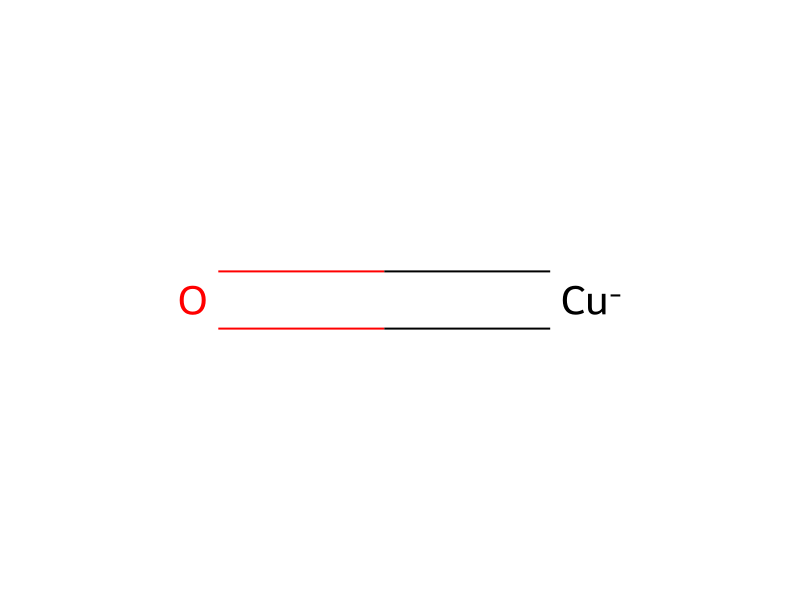
9-(4-bromophenyl) carbazole was prepared through the Ullmann Reaction following the procedures reported in the literature (Macromolecules 2004, 37, 5531-5537). Briefly, a mixture of 1-bromo-4-iodobenzene (2.83 g, 10 mmol), copper (I) oxide (2.86 g, 20 mmol) and carbazole (0.84 g, 5 mmol) in 10 ml N,N-dimethylacetamide (DMAC) was heated to reflux in an oil bath for 24 h under N2 atmosphere. The reaction mixture was cooled to room temperature and then filtered to remove excess copper complex. The filtrate was evaporated to dryness and went through silica gel column to give product, yielding 1.22 g (76%). 1H NMR (400 MHz, CDCl3): δ(ppm) 8.132-8.122 (d, J=8.0 Hz, 2H), 7.715-7.695 (t, J=8.0 Hz, 2H), 7.476-7.247 (m, 8H).
Workup
- temperaturewas heated
- temperatureto reflux in an oil bath for 24 h under N2 atmosphere
- filtrationfiltered
- customto remove excess copper complex
- customThe filtrate was evaporated to dryness
- customto give product
- customyielding 1.22 g (76%)
Sources & evidence
- ORD record
- ord-25d03e5eaafc4f9a8cf638cf00e18008
- Source dataset
- uspto-grants-2013_08
- Patent number
- US08518559B2
Reaction notes
Loading…