Water → 3'-Nitro-3,6-dihydro-2H-1,2'-bipyridine-4-carboxylic acid
Reaction equation

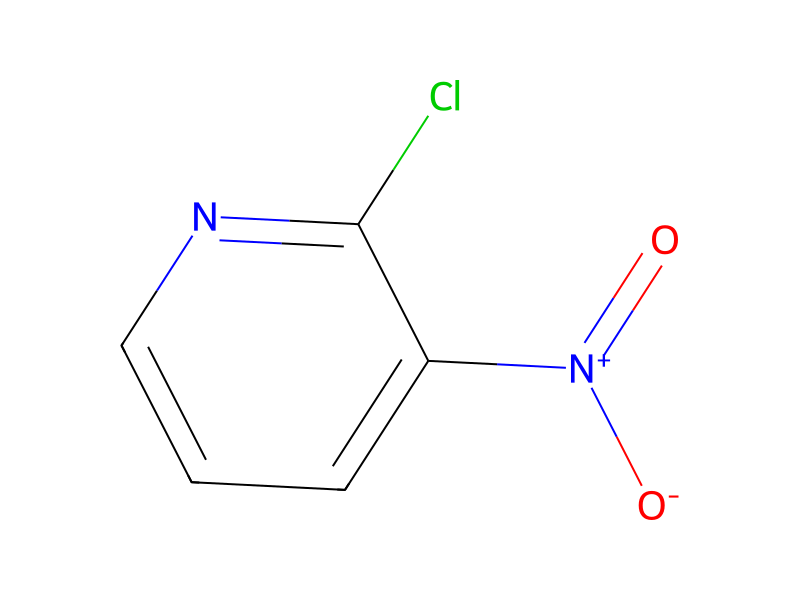
[CH2:1]1[C:6]([C:7]([OH:9])=[O:8])=[CH:5][CH2:4][NH:3][CH2:2]1.Cl.Cl[C:12]1[C:17]([N+:18]([O-:20])=[O:19])=[CH:16][CH:15]=[CH:14][N:13]=1.C(=O)([O-])[O-].[K+].[K+].O>C(O)=O>[N+:18]([C:17]1[C:12]([N:3]2[CH2:2][CH:1]=[C:6]([C:7]([OH:9])=[O:8])[CH2:5][CH2:4]2)=[N:13][CH:14]=[CH:15][CH:16]=1)([O-:20])=[O:19]Participants
6




Procedure
A well homogenised mixture of isoguvacine hydrochloride (497 mg, 3.04 mmol), 2-chloro-3-nitro-pyridine (482 mg, 3.04 mmol) and potassium carbonate (882 mg, 6.38 mmol), was stirred at 60° C. for 1.5 h. The reaction mixture was cooled, poured into a solution of water and formic acid (pH=3) and extracted with dichloromethane. The combined organic layers were washed with brine, dried on Na2SO4 and evaporated to dryness in vacuo to afford a residue, which was purified by flash chromatography (EtOAc—Petroleum Ether-Acetic Acid 20:80:0.05) affording the title product (332 mg).
Workup
- stirringwas stirred at 60° C. for 1.5 h
- temperatureThe reaction mixture was cooled
- extractionextracted with dichloromethane
- washThe combined organic layers were washed with brine
- customdried on Na2SO4
- customevaporated to dryness in vacuo
- customto afford a residue, which
- customwas purified by flash chromatography (EtOAc—Petroleum Ether-Acetic Acid 20:80:0.05)
Sources & evidence
- ORD record
- ord-31cd3288dcc1486093a8363980de89d9
- Source dataset
- uspto-grants-2013_08
- Patent number
- US08518916B2
Reaction notes
Loading…