Pyridine → HCID 306500, compound
Reaction equation

[CH3:1][O:2][C:3]1[CH:8]=[CH:7][C:6]([NH2:9])=[CH:5][CH:4]=1.N1C=CC=CC=1.[C:16](Cl)(=[O:25])[CH:17]=[CH:18][C:19]1[CH:24]=[CH:23][CH:22]=[CH:21][CH:20]=1.C(OCC)(=O)C>CC(C)=O.O>[CH3:1][O:2][C:3]1[CH:8]=[CH:7][C:6]([NH:9][C:16](=[O:25])[CH:17]=[CH:18][C:19]2[CH:24]=[CH:23][CH:22]=[CH:21][CH:20]=2)=[CH:5][CH:4]=1Participants
7
Reactant 4



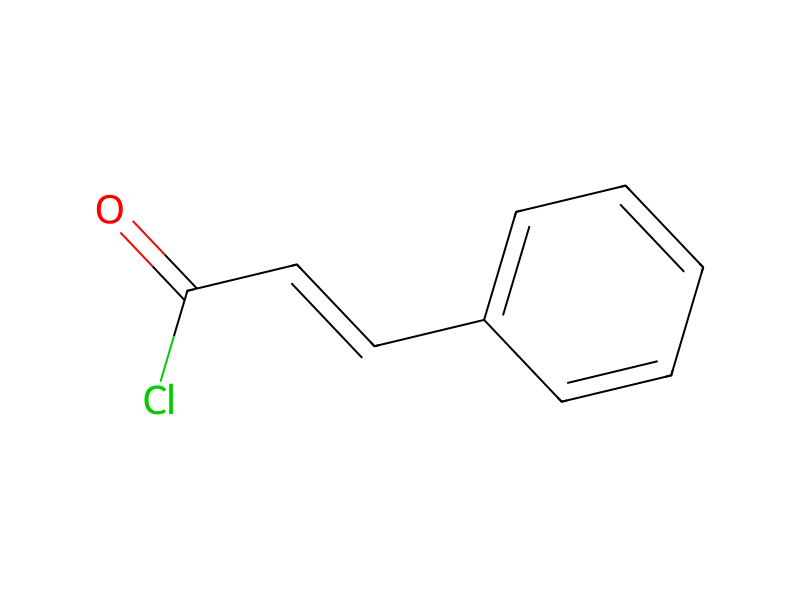
Product 1

Reagents, catalysts & solvents 2


Procedure
p-Anisidine (25 g, 0.203 mol) was suspended in acetone (400 ml), to which pyridine (19.7 ml, 0.244 mol) was added. While cooling on ice, cinnamoyl chloride (37.2 g, 0.223 mol) was further added, followed by stirring at ambient temperature for 20 minutes. As a result, a uniform solution was obtained. The solvent was condensed under reduced pressure. To the residue, ethyl acetate and water were added. The sediment was collected by filtration, washed with ethyl acetate and water, and dried with air. 50.4 g of the title compound was obtained as pale greenish brown powder (98.0%, mp.: 147°-150° C.).
Workup
- additionwas added
- additionwas further added
- customAs a result, a uniform solution was obtained
- customcondensed under reduced pressure
- filtrationThe sediment was collected by filtration
- washwashed with ethyl acetate and water
- customdried with air
Sources & evidence
- ORD record
- ord-4dd80b0739b04071a04cdc977281ec9a
- Source dataset
- uspto-grants-1996_11
- Patent number
- US05576324
Reaction notes
Loading…