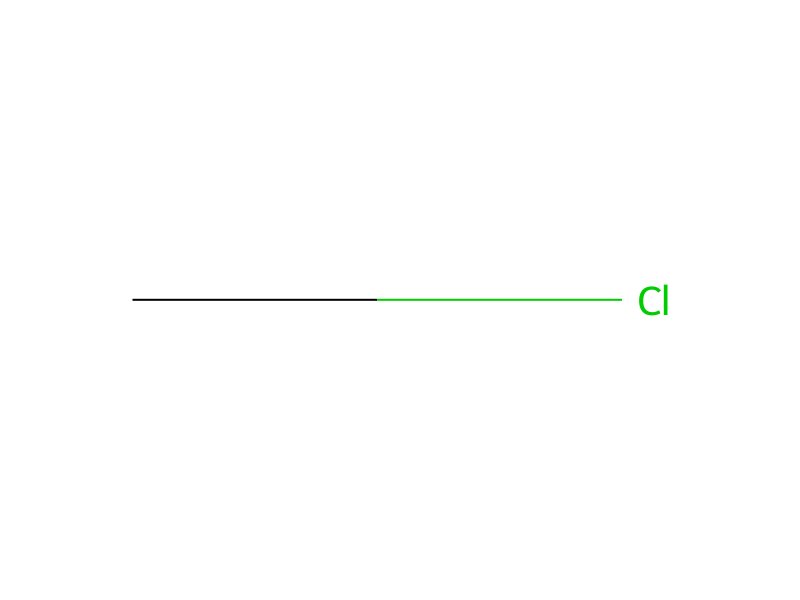
Methyl Chloride → HCID 86738693, compound
Reaction equation

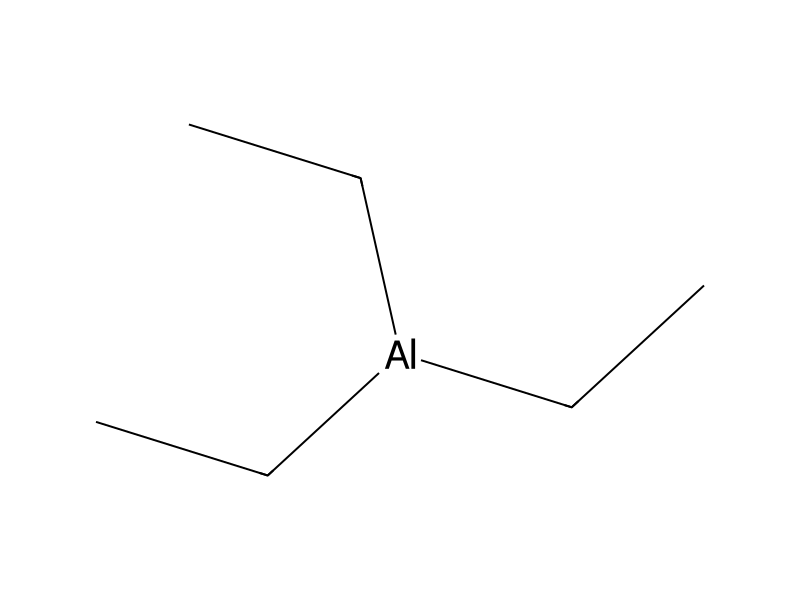
[Bi](Cl)(Cl)Cl.[CH2:5]([Al:7]([CH2:10][CH3:11])[CH2:8][CH3:9])[CH3:6].[CH3:12][Cl:13]>CCCCCCCCCC>[CH2:5]([Al:7]([CH2:10][CH3:11])[CH2:8][CH3:9])[CH3:6].[CH3:12][Cl:13]Participants
Reactant 3

Product 1

Reagents, catalysts & solvents 1

Conditions
- Temperature
- 100 °C
Procedure
A 200 ml flask was charged with 30 ml of decane and 10.24 g (32 mmoles; 24.4 mole %) of bismuth trichloride. To the white slurry was slowly added 4.0 ml of triethylaluminum. A clear, colorless solution containing a grey precipitate resulted. To this mixture was added an additional 14.0 ml (18.0 ml total; 132 mmoles) of triethylaluminum. The clear solution was removed with a syringe and placed into a 300 ml autoclave. The grey solid can be filtered off or included in the solution. The autoclave was then charged with 60 g (~1200 mmoles) of methyl chloride. The temperature of the reaction mixture was slowly raised to 100° C. (1.0 hour) then held at this temperature for 1.0-2.5 hours. The pressure of the autoclave reached a maximum of 400 psig. After allowing the autoclave to cool to room temperature, the excess gases were vented in the hood. In Runs 3 and 4, an aliquot of this gas was collected in a gas sampling bottle for gas chromatography (g.c.) (Table VI). The autoclave was then placed into the dry box and opened. The contents were poured into a wide mouth jar. Two phases were present. Nitrogen was slowly bubbled through the mixture to remove the alkyl halides from the product layer. This procedure was necessary because the alkyl halides substantially increased the solubility of the catalyst in the product layer. The two layers could be separated adequately by syringing off the top layer. An aliquot of the top layer was filtered into an NMR tube. The NMR spectrum indicated the top layer consisted of decane and alkylaluminum compounds. From the spectrum, it was possible to obtain the CH3 :C2H5 ratio. A reaction time of >1.75 hours at 100° C. was necessary to completely consume the initial triethylaluminum.
Workup
- additionA clear, colorless solution containing a grey precipitate
- customresulted
- customThe clear solution was removed with a syringe
- filtrationThe grey solid can be filtered off
- temperatureto cool to room temperature
- customIn Runs 3 and 4, an aliquot of this gas was collected in a gas
- aliquotsampling bottle for gas chromatography (g.c.) (Table VI)
- additionThe contents were poured into a wide mouth jar
- customNitrogen was slowly bubbled through the mixture
- customto remove the alkyl halides from the product layer
- temperaturesubstantially increased the solubility of the catalyst in the product layer
- customThe two layers could be separated adequately
- filtrationAn aliquot of the top layer was filtered into an NMR tube
- customto obtain the CH3
- customA reaction time of >1.75 hours
- customat 100° C.
- customto completely consume the initial triethylaluminum
Sources & evidence
- ORD record
- ord-a9b6ece7754f43ebab0343c7b94318b1
- Source dataset
- uspto-grants-1982_12
- Patent number
- US04364872
Reaction notes
Loading…