Oxalic Acid → 867-64-1
Reaction equation

[C:1]([OH:6])(=[O:5])[C:2]([OH:4])=[O:3].[Gd:7]>[Ga]>[C:1]([O-:6])(=[O:5])[C:2]([O-:4])=[O:3].[Gd+3:7].[C:1]([O-:6])(=[O:5])[C:2]([O-:4])=[O:3].[C:1]([O-:6])(=[O:5])[C:2]([O-:4])=[O:3].[Gd+3:7]Participants
Reactant 2
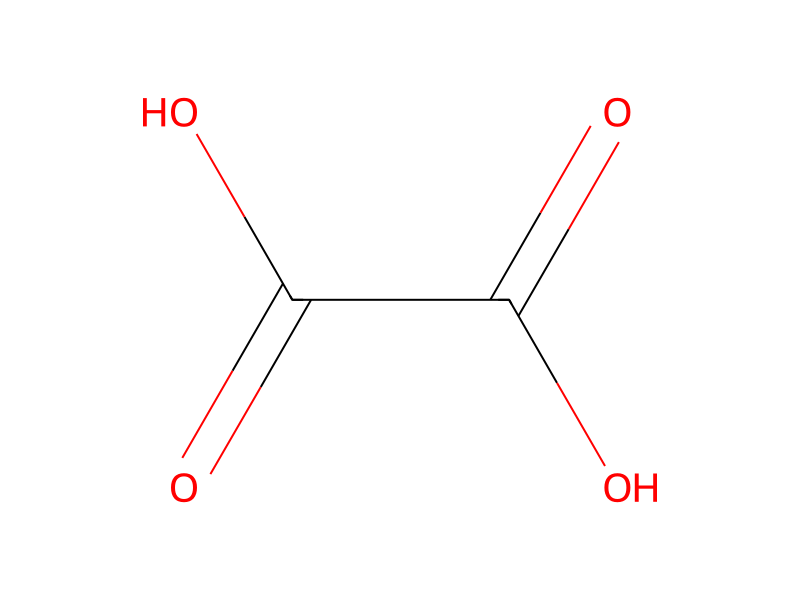

Product 1

Reagents, catalysts & solvents 1

Conditions
- Temperature
- 80 °C
Procedure
After pretreatment and dissolution in mineral acid of the gadolinium and gallium by-products as described above, the filtrate is heated to 80° C. and solid oxalic acid is added to precipitate gadolinium oxalate, Gd2 (C2O4)3. The precipitate, which forms immediately, is separated from gallium and transition metal impurities by conventional methods, by either vacuum filtration or centrifugation. The cake of gadolinium oxalate, thus obtained, may be slurried in a water solution containing 2% by weight of oxalic acid to remove trace adhering gallium solution. The yield of gadolinium oxalate is of the order of >95%. Direct pyrolysis of this oxalate at 850°-950° C. results in its conversion to gadolinium oxide, Gd2O3, in >95% yield and >99.99% purity.
Workup
- customto precipitate gadolinium oxalate, Gd2 (C2O4)3
- customis separated from gallium and transition metal impurities by conventional methods, by either vacuum filtration or centrifugation
Sources & evidence
- ORD record
- ord-25660eefe6124d638d7c1763188e17fa
- Source dataset
- uspto-grants-1984_03
- Patent number
- US04438078
Reaction notes
Loading…