3,6-Dichloropyridazine → HCID 20237843, compound
Reaction equation

[Cl:1][C:2]1[N:3]=[N:4][C:5](Cl)=[CH:6][CH:7]=1.[O:9]([CH2:16][CH:17]([OH:23])[CH2:18][NH:19][CH2:20][CH2:21][NH2:22])[C:10]1[CH:15]=[CH:14][CH:13]=[CH:12][CH:11]=1.C(N(C(C)C)C(C)C)C>C1(C)C=CC=CC=1>[O:9]([CH2:16][CH:17]([OH:23])[CH2:18][NH:19][CH2:20][CH2:21][NH:22][C:5]1[N:4]=[N:3][C:2]([Cl:1])=[CH:7][CH:6]=1)[C:10]1[CH:15]=[CH:14][CH:13]=[CH:12][CH:11]=1Participants
5
Reactant 3
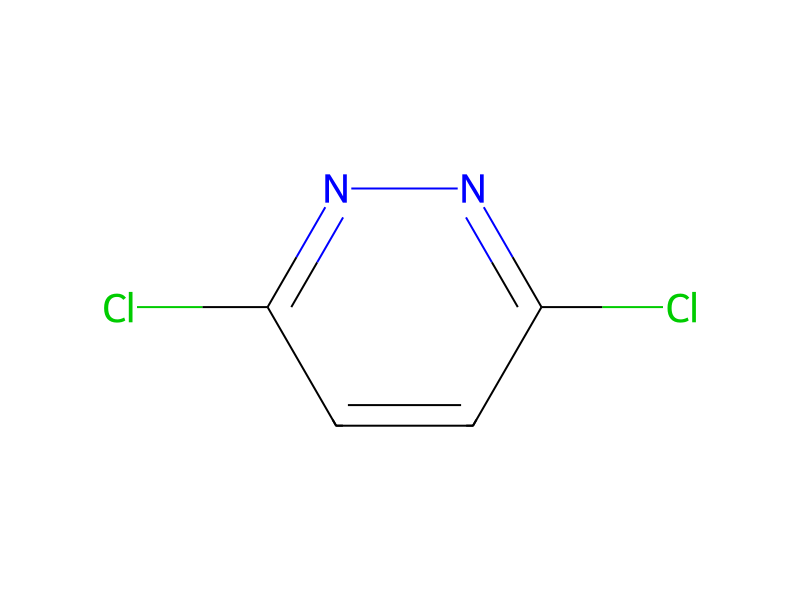


Product 1

Reagents, catalysts & solvents 1

Procedure
A mixture of 3.0 g. 3,6-dichloropyridazine, 4.2 g. 1-phenoxy-3-(2-aminoethylamino)-propan-2-ol, 3.5 ml. N-ethyldiisopropylamine and 30 ml. toluene is stirred for 24 hours at 100° C. The reaction mixture is then evaporated and the residue is digested simultaneously with 100 ml. water and 100 ml. methylene chloride, followed by suction filtration and recrystallization from isopropyl alcohol, with treatment with fullers' earth. There are obtained 1.4 g. (21% of theory) of the desired product in the form of colorless crystals; m.p. 147°-149° C.
Workup
- additionA mixture of 3.0 g
- customThe reaction mixture is then evaporated
- filtrationmethylene chloride, followed by suction filtration and recrystallization from isopropyl alcohol, with treatment with fullers' earth
- customThere are obtained 1.4 g
Sources & evidence
- ORD record
- ord-47037fe6097e4ffe8719a8ce01d114c5
- Source dataset
- uspto-grants-1984_03
- Patent number
- US04438128
Reaction notes
Loading…