Acetic Acid → 2-(2,4-Dihydroxyphenyl)-2-methyl-heptane
Reaction equation

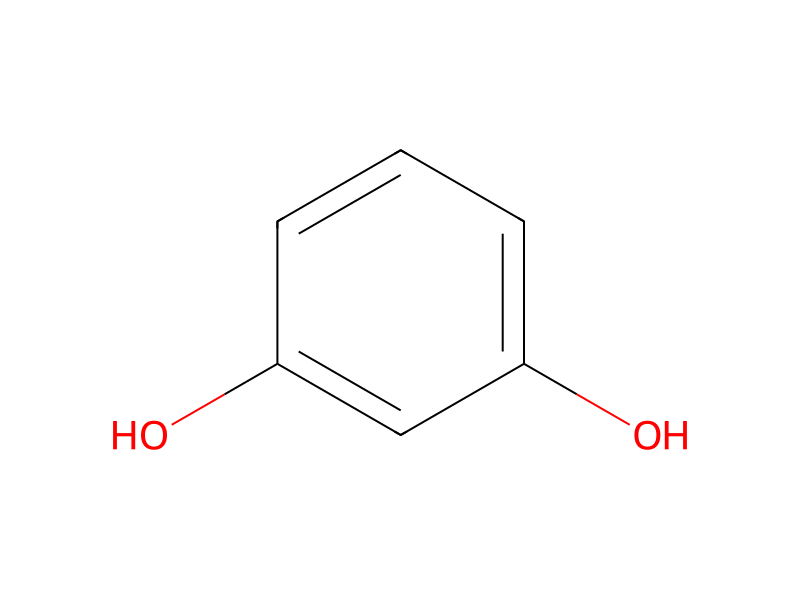
C(O)(=O)C.S(=O)(=O)(O)O.[C:10]1([CH:17]=[CH:16][CH:15]=[C:13]([OH:14])[CH:12]=1)[OH:11].O[C:19]([CH3:26])([CH2:21][CH2:22][CH2:23][CH2:24][CH3:25])[CH3:20]>O>[OH:11][C:10]1[CH:12]=[C:13]([OH:14])[CH:15]=[CH:16][C:17]=1[C:19]([CH3:26])([CH2:21][CH2:22][CH2:23][CH2:24][CH3:25])[CH3:20]Participants
6
Reactant 4



Product 1

Reagents, catalysts & solvents 1

Procedure
To 100 parts of glacial acetic acid containing 9.8 parts of 98% sulphuric acid was added 22 parts of resorcinol followed by 13 parts of 2-hydroxy-2-methyl-heptane at room temperature. After storing overnight at the same temperature the reaction mixture was poured into 1000 parts of water. The organic phase which separated out, was after decanting off the water, taken up in ether, washed with sodium bicarbonate solution, and finally with water. The ether solution was then evaporated and the residue distilled to give 2-(2,4-dihydroxyphenyl)-2-methyl-heptane (compound of the formula (4)) with a boiling point (b.p.12) of from 202°-204° C. and with the following percentage composition by weight:
Workup
- customThe organic phase which separated out
- customafter decanting off the water
- washwashed with sodium bicarbonate solution
- customThe ether solution was then evaporated
- distillationthe residue distilled
Sources & evidence
- ORD record
- ord-4d9d9cf5a3f94ff6ba55704b13268e60
- Source dataset
- uspto-grants-1984_03
- Patent number
- US04439518
Reaction notes
Loading…