Tetrahydrofuran → 2-Fluoromethyl-2-amino-3-pentenenitrile
Reaction equation

[Mg:1].[Br:2][CH:3]=[CH:4][CH3:5].[F:6][CH2:7][C:8]#[N:9].[C-:10]#[N:11].[Na+].[Cl-].[NH4+].O1C[CH2:18][CH2:17][CH2:16]1>O>[CH:16]([Mg:1][Br:2])=[CH:17][CH3:18].[F:6][CH2:7][C:8]([NH2:9])([CH:3]=[CH:4][CH3:5])[C:10]#[N:11]Participants
Reactant 6

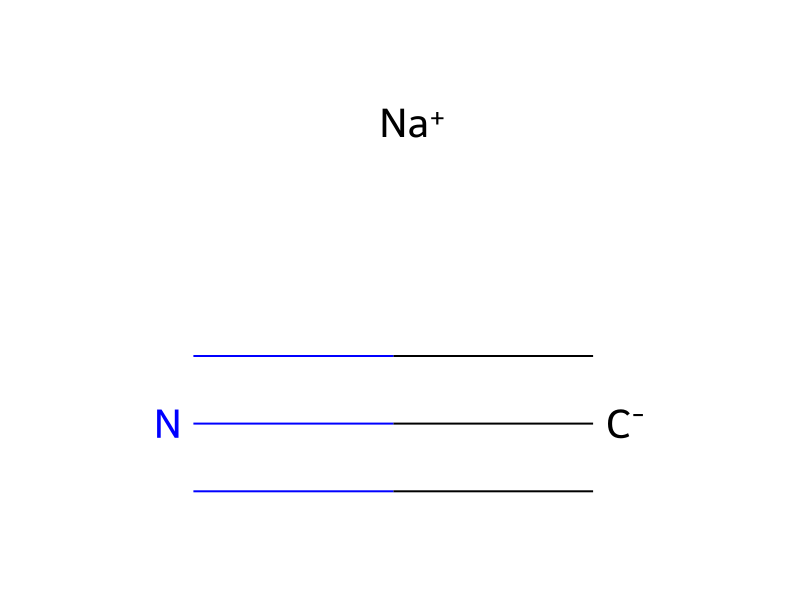




Product 2


Reagents, catalysts & solvents 1

Conditions
- Temperature
- -40 °C
Procedure
Under an atmosphere of nitrogen, propenylmagnesium bromide is prepared from magnesium turnings (9.8 g, 400 mmoles), freshly distilled 1-bromo-1-propene (24.2 g, 200 mmoles) and 200 mL of dry tetrahydrofuran. After removing the Grignard solution from the excess of magnesium and cooling to -40° C., fluoroacetonitrile (11.8 g, 200 mmoles) in tetrahydrofuran (70 mL) is added during 15 mins. The reaction mixture is then poured into a solution of sodium cyanide (40 g) and ammonium chloride (59 g) in water (400 mL) and kept 1 hour at room temperature. After saturation with sodium chloride, the tetrahydrofuran layer is separated and evaporated under reduced pressure. The residue is dissolved in diethyl ether, washed with water, dried with sodium sulfate and evaporated to give crude 2-fluoromethyl-2-amino-3-pentenenitrile (1:1 cis/trans mixture, 21.5 g, 84%) as a dark coloured oil which is used for the next step without further purification.
Workup
- customAfter removing the Grignard solution from the excess of magnesium
- customAfter saturation with sodium chloride, the tetrahydrofuran layer is separated
- customevaporated under reduced pressure
- dissolutionThe residue is dissolved in diethyl ether
- washwashed with water
- dry with materialdried with sodium sulfate
- customevaporated
Sources & evidence
- ORD record
- ord-bce568b8c416472db46bfeb5cc8640b6
- Source dataset
- uspto-grants-1984_03
- Patent number
- US04439619
Reaction notes
Loading…