Water → 1-(pyrrolidin-1-yl)hexan-1-one
Reaction equation

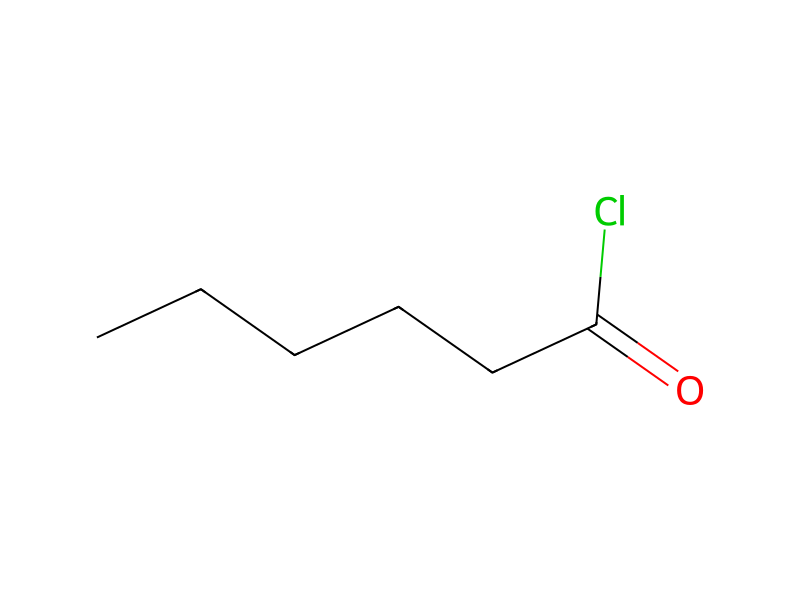
[C:1](Cl)(=[O:7])[CH2:2][CH2:3][CH2:4][CH2:5][CH3:6].[NH:9]1[CH2:13][CH2:12][CH2:11][CH2:10]1.O>C1C=CC=CC=1.N1C=CC=CC=1>[C:1]([N:9]1[CH2:13][CH2:12][CH2:11][CH2:10]1)(=[O:7])[CH2:2][CH2:3][CH2:4][CH2:5][CH3:6]Participants
6
Reactant 3


Product 1

Reagents, catalysts & solvents 2


Procedure
Hexanoyl chloride (13.46 g, 0.1M) was added gradually to a cooled, stirred solution of pyrrolidine (7,25 g, 0.1M) in 200 ml of benzene and dry pyridine (7.91 g, 0.1M). Two hours after the addition water was added. The organic layer was washed successively with 5% aqueous hydrochloric acid, saturated sodium bicarbonate solution, and saturated sodium chloride solution. The organic layer was dried over anhydrous sodium sulfate, filtered and concentrated. Distillation of the residue gave 13.52 g (80%) of a colorless oil, b.p. 98-100/7 mm.
Workup
- additionwas added
- washThe organic layer was washed successively with 5% aqueous hydrochloric acid, saturated sodium bicarbonate solution, and saturated sodium chloride solution
- dry with materialThe organic layer was dried over anhydrous sodium sulfate
- filtrationfiltered
- concentrationconcentrated
- distillationDistillation of the residue
Sources & evidence
- ORD record
- ord-7ef10fa8f14a4c96a0174c45d1942acc
- Source dataset
- uspto-grants-1989_06
- Patent number
- US04837026
Reaction notes
Loading…