Ethylene → Ethane
Reaction equation

[CH2:1]=[CH2:2].[CH:3]([Cl:5])=[CH2:4].[CH:6]#[CH:7]>[Pd]>[CH3:3][CH3:4].[CH2:3]([Cl:5])[CH3:4].[CH3:1][CH2:2][CH2:6][CH3:7]Participants
Reactant 3



Product 3

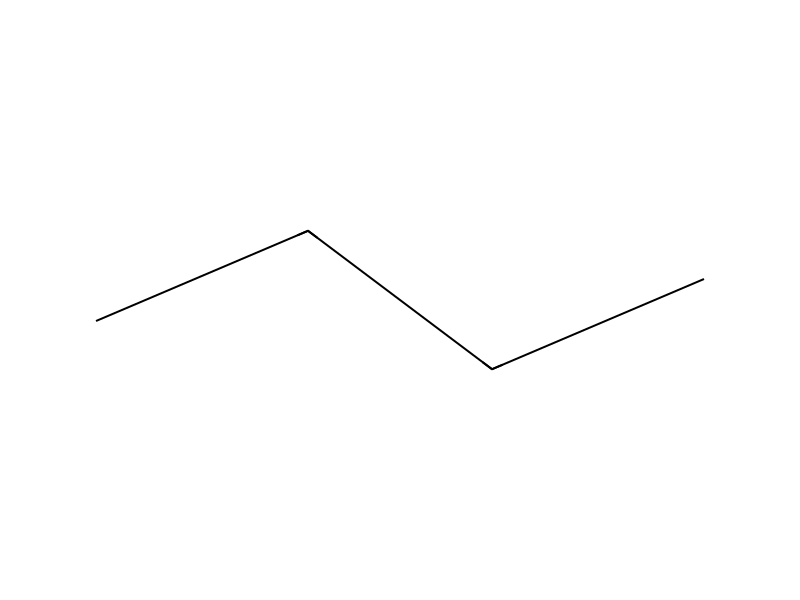
Reagents, catalysts & solvents 1

Procedure
The reactor was packed to a bed height of 1.50 m with hydrogenation catalyst consisting of gamma-aluminum oxide with a specific surface of 120 m2 /g and doped with 0.1 wt % of palladium. The catalyst was used in the form of tablets measuring 3 mm×3 mm. In reactor 4, ethylene, vinyl chloride, unsaturated C4 -hydrocarbons and optionally acetylene were hydrogenated to form mainly ethane, ethyl chloride and n-butane. The superficial gas velocity calculated with respect to the internal reactor cross-section under reaction conditions is approx. 0.25 msec-1 and the contact time was calculated as approx. 6 seconds. Since the reactor was adiabatically operated and the hydrogenation proceeds weakly exothermically, the gas mixture left reactor 4 at a temperature of approx. 140° C. The gas mixture was passed to water cooler 6 by line 5 where it was cooled to 30° C. Then, the gas mixture flew to the suction side of compressor 7 where it was compressed from approx. 7.5 bar (absolute) to 14 bar (absolute). After the compressed gas was cooled to approx. 30° C. in water cooler 8 and further supercooled by heat exchange with hydrogen chloride gas of approx. -24° C. from the head of the rectifying column 10 in counter-current heat exchanger 9, the gaseous hydrogen chloride flowed through line 5 into column 10, while any produced condensate flowed from water cooler 8 and counter-current heat exchanger 9 through lines 11 and 12 to receiving tank 25.
Sources & evidence
- ORD record
- ord-14dfed0fa6de4e74ac3f4d77013c4a76
- Source dataset
- uspto-grants-1989_06
- Patent number
- US04839153
Reaction notes
Loading…