Acrylic Acid → HCID 14501419, compound
Reaction equation

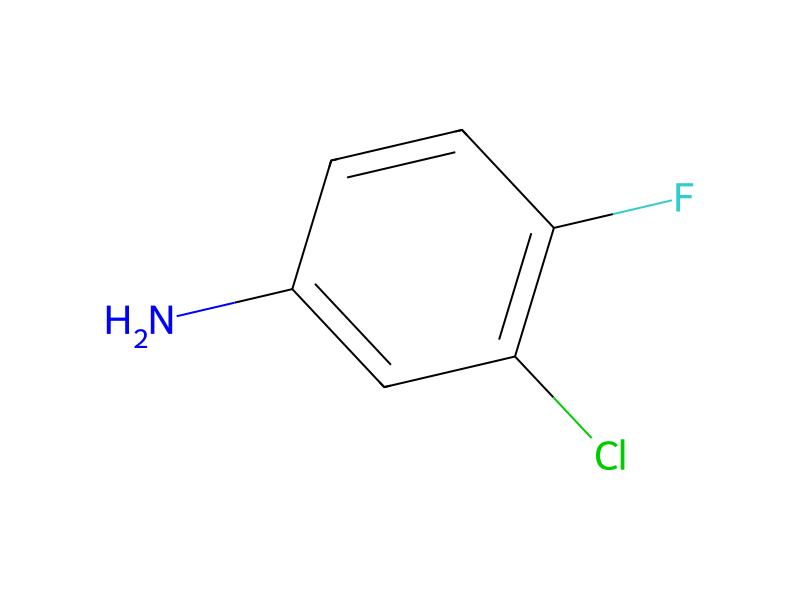
[Cl:1][C:2]1[CH:3]=[C:4]([NH:9][CH2:10][CH2:11][C:12]([OH:14])=O)[CH:5]=[CH:6][C:7]=1[F:8].ClC1C=C(C=CC=1F)N.C(O)(=O)C=C.C(OC)(=O)C=C>ClCCl.O>[Cl:1][C:2]1[CH:3]=[C:4]2[C:5]([C:12](=[O:14])[CH2:11][CH2:10][NH:9]2)=[CH:6][C:7]=1[F:8]Participants






Conditions
- Temperature
- 110 °C
Procedure
A mixture of polyphosphoric acid (600 g) and 3-(3-chloro-4-fluorophenylamino)propionic acid (38 g), which was synthesized from 3-chloro-4-fluoroaniline and acrylic acid or methyl acrylate by the method of W.S. Johnson et al. (The Journal of American Chemical Society, volume 71, page 1901, (1949)), was stirred at 110° C. for 70 minutes. The reaction mixture was poured into 1500 ml of water, then shaken with dichloromethane (1500 ml). The organic layer was washed twice with saturated agqueous NaCl solution (200 ml each) and dried over anhydrous sodium sulfate. Dichloromethane was removed in vacuo and the residue was subjected to silica gel colum chromatography using a mixed solvent (n-hexane: ether-4:1) to obtain 7-chloro-6-fluoro-2,3-dihydro-4(1H)-quinolinone (yield 20 g) as pale yellow crystal.
Workup
- washThe organic layer was washed twice with saturated agqueous NaCl solution (200 ml each)
- dry with materialdried over anhydrous sodium sulfate
- customDichloromethane was removed in vacuo
Sources & evidence
- ORD record
- ord-801b3c95e2944fb5af879512c9ef9ecd
- Source dataset
- uspto-grants-1989_06
- Patent number
- US04839368
Reaction notes
Loading…