Isobutyraldehyde → 4-Formyl-4-methylvaleronitrile
Reaction equation

[CH:1](=[O:5])[CH:2]([CH3:4])[CH3:3].[C:6](#[N:9])[CH:7]=[CH2:8].[OH-].[Na+]>O1CCOCC1.O.C1(C=CC(O)=CC=1)O>[CH3:3][C:2]([CH3:4])([CH:1]=[O:5])[CH2:8][CH2:7][C:6]#[N:9]Participants
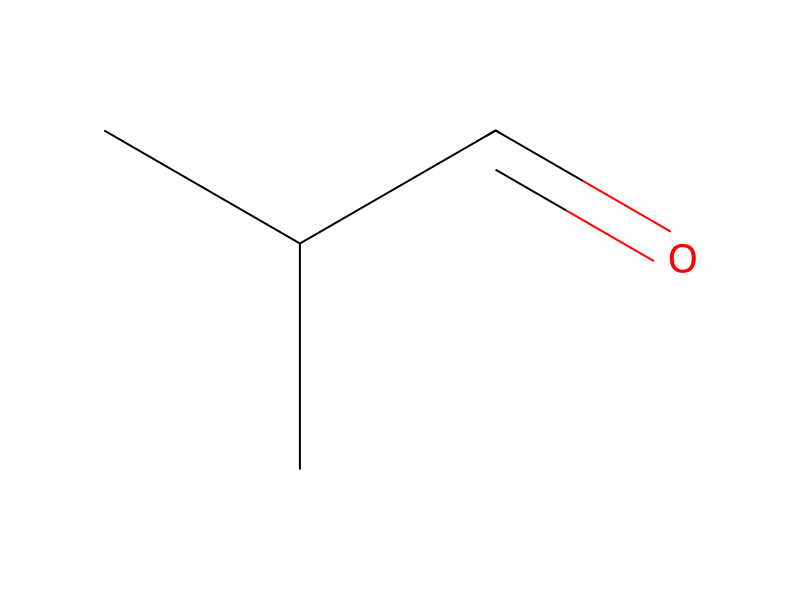






Conditions
- Temperature
- 65 °C
Procedure
To a solution of 64.8 g (0.898 mmol, 51.45 mL) of isobutyraldehyde in 300 mL of dry dioxane was added 300 mg of hydroquinone (0.0027 mmol) and 60.0 g (1.13 mmol; 1.26 eq; 48.4 mL) of acrylonitrile. To this stirred solution was added all at once a freshly prepared solution of 3 g of NaOH dissolved in 60 mL of water and the whole was heated at 65° C. during 150 min. After cooling to 20° C., removal of the solvents under aspirator vacuum gave a residue which was partitioned between water and CH2Cl2. After separation, the aqueous layer was extracted 3 times with CH2Cl2 and the combined organic layers dried over Na2SO4 and concentrated under vacuum (aspirator). The crude residue was distilled under vacuum 81° C./lmm Hg) to yield 54 g (49%) of 4,4-dimethyl-5-oxovaleronitrile.
Workup
- temperatureAfter cooling to 20° C.
- customremoval of the solvents under aspirator vacuum
- customgave a residue which
- customwas partitioned between water and CH2Cl2
- customAfter separation
- extractionthe aqueous layer was extracted 3 times with CH2Cl2
- dry with materialthe combined organic layers dried over Na2SO4
- concentrationconcentrated under vacuum (aspirator)
- distillationThe crude residue was distilled under vacuum 81° C./lmm Hg)
Sources & evidence
- ORD record
- ord-02ef0ce0bcf74f7cac08b6310ab9ccdf
- Source dataset
- uspto-grants-1989_06
- Patent number
- US04841045
Reaction notes
Loading…