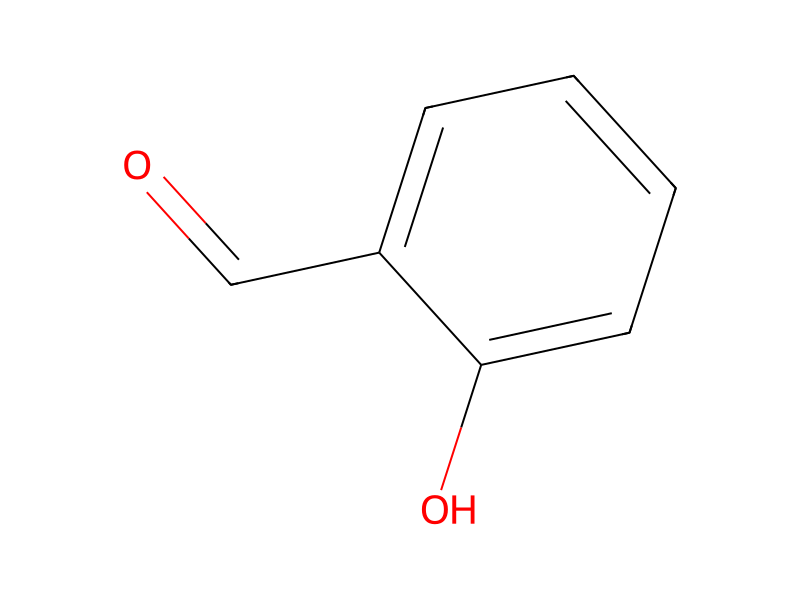
Salicylaldehyde → HCID 14676386, compound
Reaction equation

[OH:1][C:2]1[CH:9]=[CH:8][CH:7]=[CH:6][C:3]=1[CH:4]=[O:5].[CH3:10][C:11]([CH3:20])([CH2:14][CH2:15][CH2:16][CH2:17][CH2:18][CH3:19])[CH2:12]I>>[CH3:10][C:11]([CH3:20])([CH2:14][CH2:15][CH2:16][CH2:17][CH2:18][CH3:19])[CH2:12][O:1][C:2]1[CH:9]=[CH:8][CH:7]=[CH:6][C:3]=1[CH:4]=[O:5]Participants
3


Procedure
2-Hydroxybenzaldehyde was condensed with 2,2-dimethyl-1-iodo octane to yield 2-(2,2-dimethyl octyloxy)benzaldehyde which was reduced to 2-(2,2-dimethyl, octyloxy)benzyl alcohol and then converted to [[2-(2,2-dimethyloctyloxy)phenyl]methyl]triphenylphosphonium bromide as in Example 1. Condensation of this phosphonium bromide with 7-formyl-3-methyl-2,4,6-octatrienoic acid ethyl ester as described in Example 3 followed by hydrolysis, as in Example 5, gave the (All-E)-3,7-Dimethyl-9-[2-[(2,2-dimethyl-octyl)oxy]phenyl]-2,4,5,8-non-atetraenoic acid mp 113°-117° (from dichloromethane/hexane mixture).
Sources & evidence
- ORD record
- ord-7ba9b18007ed4493af2e89906a85205e
- Source dataset
- uspto-grants-1987_03
- Patent number
- US04648996
Reaction notes
Loading…