Ethylene Glycol → Salicylaldehyde
Reaction equation

O.O.O.O.O.O.[Cr](Cl)(Cl)(=O)=O.[N+]([C:15]1[CH:20]=[C:19](S(O)(=O)=O)[C:18]([OH:25])=[C:17](N)[CH:16]=1)([O-])=O.C(O)[CH2:28][OH:29]>>[CH:28](=[O:29])[C:19]1[C:18](=[CH:17][CH:16]=[CH:15][CH:20]=1)[OH:25]Participants


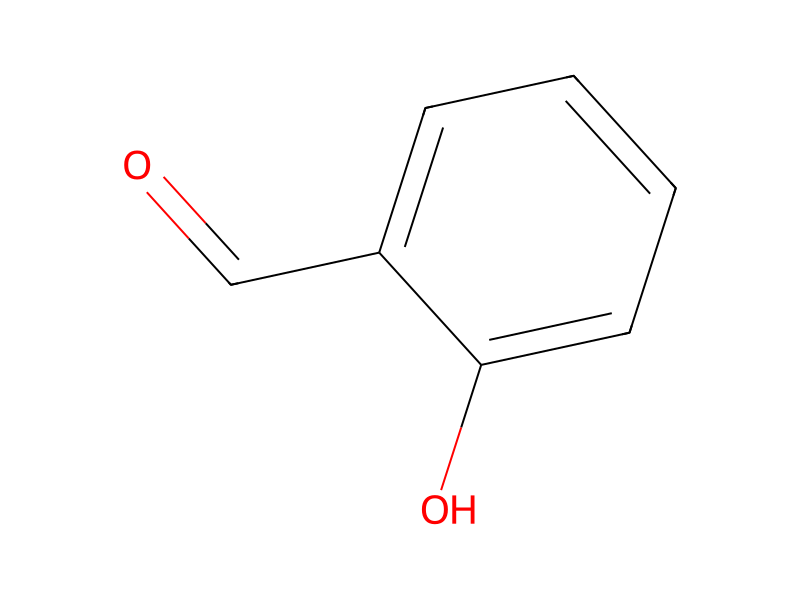
Procedure
30.9 parts of the monoazo dye formed from diazotised 4-nitro-2-amino-1-hydroxybenzene and 2-hydroxynaphthalene are stirred up with 26.7 parts of chromic chloride hexahydrate in 400 parts by volume of ethylene glycol at 120° to 125° C. until no further unchromed dye is detectable. To the resulting solution of the 1:1 chrome complex dye at 80° to 85° C. are thereupon added 23.4 parts of 4-nitro-2-amino-1-hydroxybenzene-6-sulfonic acid and 45.3 parts of the monoazo dye formed from diazotised dehydrothio-p-toluidine-7-sulfonic acid and salicylaldehyde, and the mixture is held at this temperature until the addition reaction has finished. The pH value of the reaction mixture is adjusted to and maintained at 7 to 7.5 during the reaction by the addition of 5N sodium hydroxide solution. After completion of the reaction, the chromium-containing dye is precipitated by the addition of a saturated sodium chloride solution, filtered off and dried. It is in the form of a dark powder which dissolves in water to give a brown colour, and which dyes wool, polyamide material and leather in brown shades having good fastness properties.
Sources & evidence
- ORD record
- ord-7badd124231c432fa166401d909f0557
- Source dataset
- uspto-grants-1987_03
- Patent number
- US04650859
Reaction notes
Loading…