1-(2-Pyridyl)piperazine → HCID 66918237, compound
Reaction equation

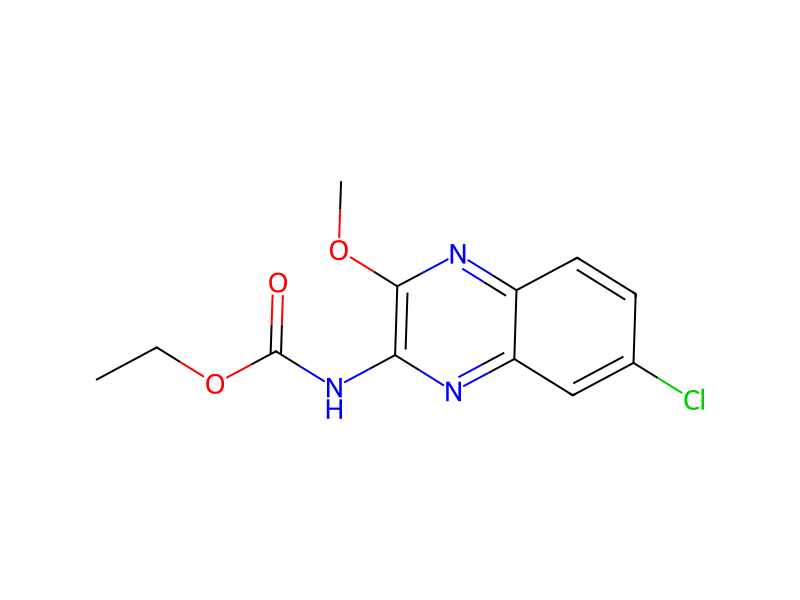
[Cl:1][C:2]1[CH:3]=[C:4]2[C:9](=[CH:10][CH:11]=1)[N:8]=[C:7]([O:12][CH3:13])[C:6]([NH:14][C:15](=[O:19])OCC)=[N:5]2.[N:20]1[CH:25]=[CH:24][CH:23]=[CH:22][C:21]=1[N:26]1[CH2:31][CH2:30][NH:29][CH2:28][CH2:27]1>>[Cl:1][C:2]1[CH:3]=[C:4]2[C:9](=[CH:10][CH:11]=1)[N:8]=[C:7]([O:12][CH3:13])[C:6]([NH:14][C:15]([N:29]1[CH2:30][CH2:31][N:26]([C:21]3[CH:22]=[CH:23][CH:24]=[CH:25][N:20]=3)[CH2:27][CH2:28]1)=[O:19])=[N:5]2Participants
3


Procedure
Ethyl N-(6-chloro-2-methoxyquinoxalin-3-yl)carbamate and 1-(2-pyridyl)piperazine were reacted by the same way with the example 22 to obtain the titled compound (yield, 70%). 1H NMR (300 MHz, CDCl3): δ 3.63-3.73 (m, 7H), 4.08-4.15 (m, 4H), 6.68 (d, J=8.7 Hz, 2H), 7.20-7.31 (m, 1H), 7.42-7.53 (m, 2H), 7.65-7.80 (m, 2H), 8.21 (d, J=3.6 Hz, 1H).
Sources & evidence
- ORD record
- ord-501feb57166b4075a85e96198e3bd1f5
- Source dataset
- uspto-grants-2013_12
- Patent number
- US08598173B2
Reaction notes
Loading…