Potassium Carbonate → (R)-Methyl 4-((3-(dimethylamino)pyrrolidin-1-yl)methyl)benzoate
Reaction equation

Br[CH2:2][C:3]1[CH:12]=[CH:11][C:6]([C:7]([O:9][CH3:10])=[O:8])=[CH:5][CH:4]=1.[CH3:13][N:14]([CH3:20])[C@@H:15]1[CH2:19][CH2:18][NH:17][CH2:16]1.C(=O)([O-])[O-].[K+].[K+]>COCCOC.C(Cl)Cl>[CH3:13][N:14]([CH3:20])[C@@H:15]1[CH2:19][CH2:18][N:17]([CH2:2][C:3]2[CH:12]=[CH:11][C:6]([C:7]([O:9][CH3:10])=[O:8])=[CH:5][CH:4]=2)[CH2:16]1Participants
6
Reactant 3


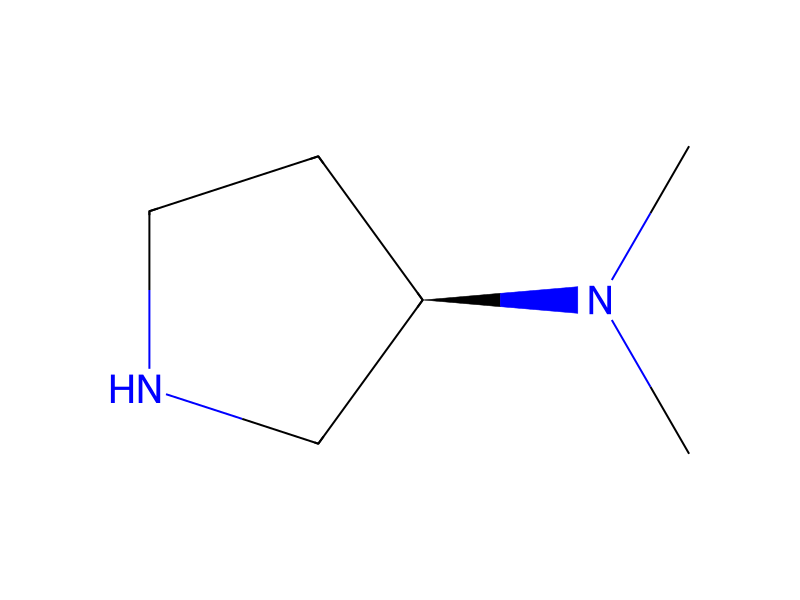
Product 1

Reagents, catalysts & solvents 2


Procedure
Methyl 4-(bromomethyl)benzoate 5 (0.5 g, 2.2 mmol), (R)—N,N-dimethylpyrrolidin-3-amine (0.523 g, 4.6 mmol) and potassium carbonate (0.392 g, 2.8 mmol) were stirred at room temperature for 18 h in ethyleneglycol dimethylether (3 mL) then diluted with DCM (20 mL), washed with brine, dried over MgSO4 and concentrated to give title compound 6 (0.57 g, 96% yield).
Workup
- washwashed with brine
- dry with materialdried over MgSO4
- concentrationconcentrated
Sources & evidence
- ORD record
- ord-ab00485a397446c3a5043b0af93e6af6
- Source dataset
- uspto-grants-2013_12
- Patent number
- US08598168B2
Reaction notes
Loading…