1,2-Dimethoxyethane → 2-(4'-tert-Butyl[1,1'-biphenyl]-3-yl)pyridine
Reaction equation

Br[C:2]1[CH:3]=[C:4]([C:8]2[CH:13]=[CH:12][CH:11]=[CH:10][N:9]=2)[CH:5]=[CH:6][CH:7]=1.[C:14]([C:18]1[CH:23]=[CH:22][C:21](B(O)O)=[CH:20][CH:19]=1)([CH3:17])([CH3:16])[CH3:15].C([O-])([O-])=O.[K+].[K+].COCCOC>O>[C:14]([C:18]1[CH:23]=[CH:22][C:21]([C:2]2[CH:7]=[CH:6][CH:5]=[C:4]([C:8]3[CH:13]=[CH:12][CH:11]=[CH:10][N:9]=3)[CH:3]=2)=[CH:20][CH:19]=1)([CH3:17])([CH3:16])[CH3:15]Participants
6





Procedure
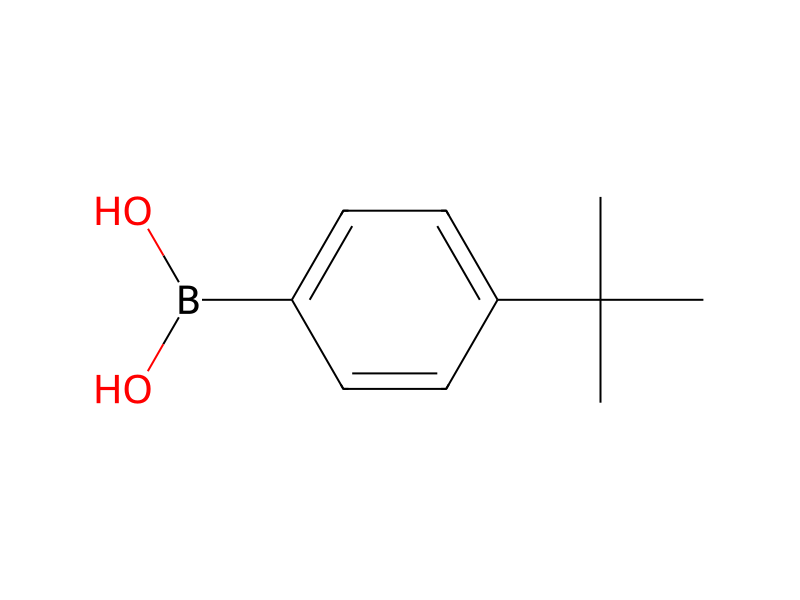
13.7 g (0.058 mol) of 2-(3-bromophenyl)pyridine was added to 12.5 g (0.070 mol) of 4-tert-butylphenylboronic acid, 3.4 g (0.003 mol) of Pd(Ph3)4, 22.0 g (0.16 mol) of K2CO3, 50 mL of DME and 50 mL of water. The reaction mixture was refluxed for 20 hours and separated on silica gel column. MS confirmed the desired product.
Workup
- temperatureThe reaction mixture was refluxed for 20 hours
- customseparated on silica gel column
Sources & evidence
- ORD record
- ord-771ad6cede1c489f9fb6b87c4b81cfb9
- Source dataset
- uspto-grants-2013_12
- Patent number
- US08603645B2
Reaction notes
Loading…