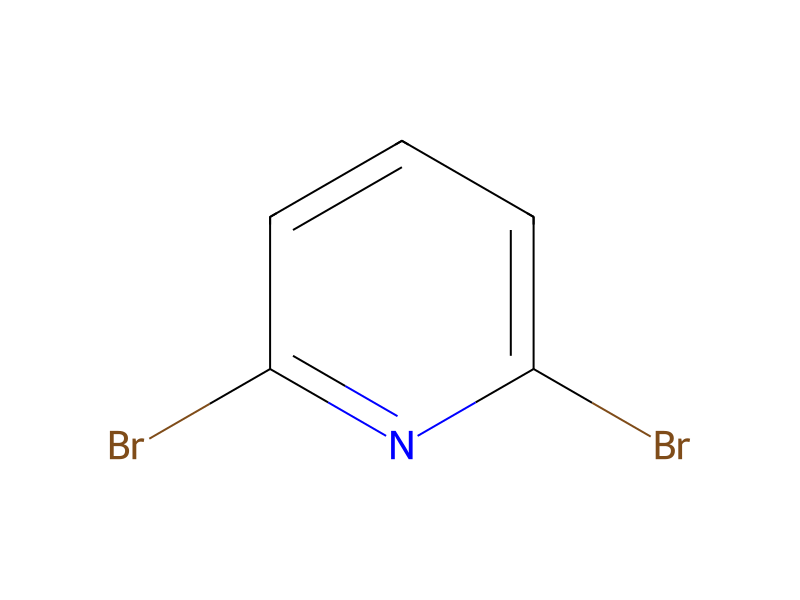
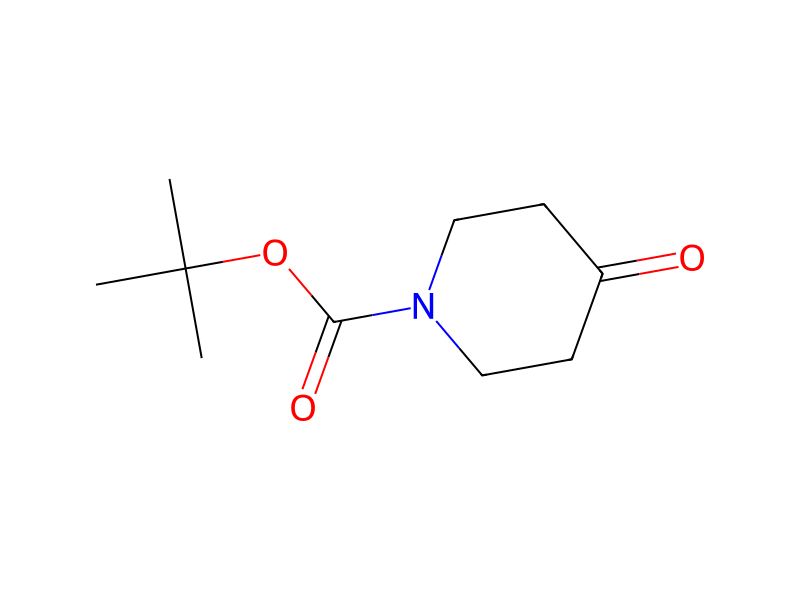
2,6-Dibromopyridine → tert-Butyl 4-(6-bromopyridin-2-yl)-4-hydroxypiperidine-1-carboxylate
Reaction equation

Br[C:2]1[CH:7]=[CH:6][CH:5]=[C:4]([Br:8])[N:3]=1.C([Li])CCC.[O:14]=[C:15]1[CH2:20][CH2:19][N:18]([C:21]([O:23][C:24]([CH3:27])([CH3:26])[CH3:25])=[O:22])[CH2:17][CH2:16]1.[Cl-].[NH4+]>ClCCl>[Br:8][C:4]1[N:3]=[C:2]([C:15]2([OH:14])[CH2:16][CH2:17][N:18]([C:21]([O:23][C:24]([CH3:26])([CH3:25])[CH3:27])=[O:22])[CH2:19][CH2:20]2)[CH:7]=[CH:6][CH:5]=1Participants




Conditions
- Temperature
- -78 °C
Procedure
To a solution of 2,6-dibromopyridine (34 g) in dichloromethane (740 ml) is added dropwise, at −78° C. under argon, n-butyllithium (1.6 M in tetrahydrofuran, 100 ml). The reaction mixture is stirred at −78° C. for 20 minutes and then tert-butyl 4-oxopiperidine-1-carboxylate is added. The mixture is stirred at room temperature for 20 minutes. The reaction mixture is subsequently admixed with saturated ammonium chloride solution at −30° C. and the aqueous phase is removed. After the aqueous phase has been extracted with dichloromethane, the combined organic phases are dried over sodium sulphate and concentrated under reduced pressure. The residue is purified by chromatography. This gives tert-butyl 4-(6-bromopyridin-2-yl)-4-hydroxypiperidine-1-carboxylate (60 g).
Workup
- stirringThe mixture is stirred at room temperature for 20 minutes
- customthe aqueous phase is removed
- extractionAfter the aqueous phase has been extracted with dichloromethane
- dry with materialthe combined organic phases are dried over sodium sulphate
- concentrationconcentrated under reduced pressure
- customThe residue is purified by chromatography
Sources & evidence
- ORD record
- ord-9ff8f1c062bc4788a81a1ff063e3a62d
- Source dataset
- uspto-grants-2013_12
- Patent number
- US08604040B2
Reaction notes
Loading…