Potassium borohydride → HCID 86685117, compound
Reaction equation

[Br:1][C:2]1[CH:3]=[CH:4][C:5]([Cl:21])=[C:6]([C:8]([C:10]2[CH:15]=[CH:14][C:13]([O:16][CH2:17][CH3:18])=[C:12]([F:19])[C:11]=2[F:20])=[O:9])[CH:7]=1.[BH4-].[K+]>Cl>[Br:1][C:2]1[CH:3]=[CH:4][C:5]([Cl:21])=[C:6]([CH:8]([C:10]2[CH:15]=[CH:14][C:13]([O:16][CH2:17][CH3:18])=[C:12]([F:19])[C:11]=2[F:20])[OH:9])[CH:7]=1Participants
Reactant 2
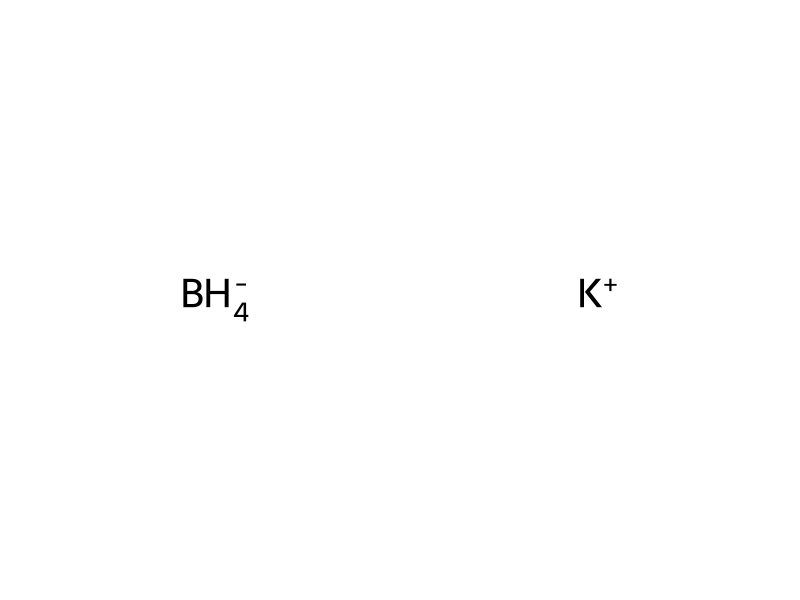

Product 1

Reagents, catalysts & solvents 1

Procedure
(5-bromo-2-chloro-phenyl)-(4-ethoxy-2,3-difluoro-phenyl)methanone 3c (8.0 g, 21.3 mmol) was dissolved in 240 mL of mixed solution (THF and MeOH, v:v=1:1), followed by addition of potassium borohydride (1.73 g, 32.0 mmol) in an ice bath. The reaction mixture was stirred for 16 hours at room temperature. Thereafter, 50 mL 1 M hydrochloric acid were added. The reaction mixture was concentrated under reduced pressure and extracted with dichloromethane (100 mL×2). The organic extract was combined, dried over anhydrous magnesium sulfate, and filtered. The filtrate was concentrated under reduced pressure to obtain the title compound (5-bromo-2-chloro-phenyl)-(4-ethoxy-2,3-difluoro-phenyl)methanol 3d (8.0 g, yellow grease), which was used directly in the next step without purification.
Workup
- concentrationThe reaction mixture was concentrated under reduced pressure
- extractionextracted with dichloromethane (100 mL×2)
- extractionThe organic extract
- dry with materialdried over anhydrous magnesium sulfate
- filtrationfiltered
- concentrationThe filtrate was concentrated under reduced pressure
Sources & evidence
- ORD record
- ord-78511bc3fbdc4720a70ab414bc62934e
- Source dataset
- uspto-grants-2013_12
- Patent number
- US08609622B2
Reaction notes
Loading…