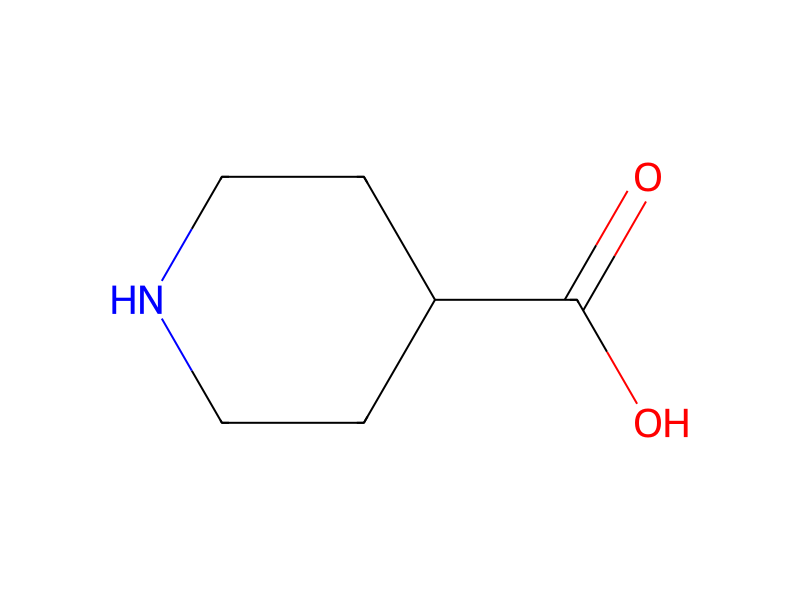
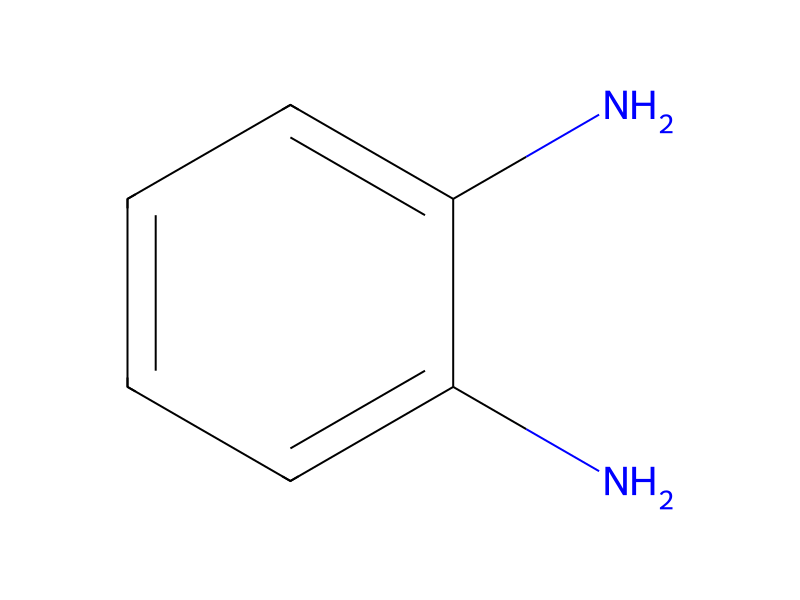
4-Piperidinecarboxylic acid → 2-(piperidin-4-yl)-1H-1,3-benzodiazole
Reaction equation

[C:1]1([NH2:8])[C:2]([NH2:7])=[CH:3][CH:4]=[CH:5][CH:6]=1.[NH:9]1[CH2:14][CH2:13][CH:12]([C:15](O)=O)[CH2:11][CH2:10]1.[OH-].[Na+]>Cl>[NH:9]1[CH2:14][CH2:13][CH:12]([C:15]2[NH:8][C:1]3[CH:6]=[CH:5][CH:4]=[CH:3][C:2]=3[N:7]=2)[CH2:11][CH2:10]1Participants
5
Reactant 3

Product 1

Reagents, catalysts & solvents 1

Procedure
This compound is synthesized as described by adaptation of the following reference: J. Heterocyclic Chem., 1989, 26, 54. A mixture of benzene-1,2-diamine (12.6 g, 116 mmol), piperidine-4-carboxylic acid (15 g, 116 mmol) and 4M aqueous HCl (250 mL) is stirred and heated under reflux for 48 h. The reaction mixture is cooled to room temperature and is made basic by addition of 5M aqueous NaOH. The precipitate formed is collected by suction filtration, washed with water and dried in the vacuum oven to afford 8.8 g (38%) of 2-(piperidin-4-yl)-1H-benzimidazole. m/z=202 [M++H].
Workup
- customThis compound is synthesized
- temperatureheated
- temperatureunder reflux for 48 h
- customThe precipitate formed
- filtrationis collected by suction filtration
- washwashed with water
- customdried in the vacuum oven
Sources & evidence
- ORD record
- ord-928d8aeccbed413496fc2d1e4e3f0f88
- Source dataset
- uspto-grants-2013_12
- Patent number
- US08609696B2
Reaction notes
Loading…