Hydrochloric Acid → 3-fluoro-1-(4-nitro-1H-pyrazol-5-yl)azepan-4-one
Reaction equation

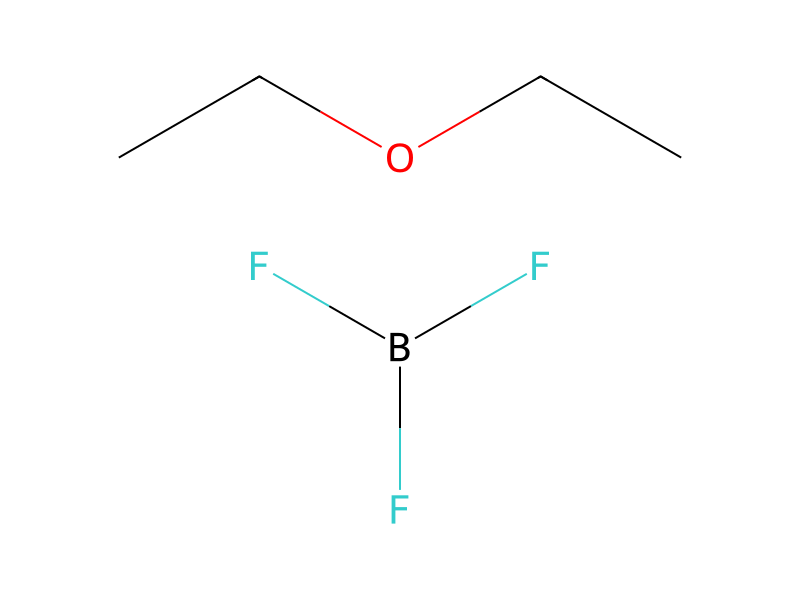
FC1C(=O)CCN(C2NN=CC=2[N+]([O-])=O)C1.[F:17][CH:18]1[CH2:24][N:23]([C:25]2[NH:29][N:28]=[CH:27][C:26]=2[N+:30]([O-:32])=[O:31])[CH2:22][CH2:21][CH:20](C(OCC)=O)[C:19]1=[O:38].[N+](=CC(OCC)=O)=[N-].B(F)(F)F.CCOCC.Cl>ClCCl>[F:17][CH:18]1[C:19](=[O:38])[CH2:20][CH2:21][CH2:22][N:23]([C:25]2[NH:29][N:28]=[CH:27][C:26]=2[N+:30]([O-:32])=[O:31])[CH2:24]1Participants
Reactant 5



Product 1

Reagents, catalysts & solvents 1

Procedure
FIG. 10 shows an exemplary synthesis of 3-fluoro-1-(4-nitro-1H-pyrazol-5-yl)azepan-4-amine 52 from 5-chloro-4-nitro-1H-pyrazole 3. Heating 3 with piperidin-4-one hydrochloride hydrate and potassium fluoride in a suitable solvent such as dimethylsulfoxide or using methods described in the literature gives 1-(4-nitro-1H-pyrazol-5-yl)piperidin-4-one 46. Heating 46 with trimethylsilyl chloride and triethylamine in a suitable solvent such as DMF or using methods described in the literature gives 1-(4-nitro-1H-pyrazol-5-yl)-4-(trimethylsilyloxy)-1,2,3,6-tetrahydropyridine 47. Fluorination of 47 using SelectFluor® in acetonitrile at a suitable temperature or using methods described in the literature gives 3-fluoro-1-(4-nitro-1H-pyrazol-5-yl)piperidin-4-one 48. Ring expansion of 48 to ethyl 6-fluoro-1-(4-nitro-1H-pyrazol-5-yl)-5-oxoazepane-4-carboxylate 49 may be achieved using ethyl diazoacetate and boron trifluoride diethyl etherate in a suitable solvent such as dichloromethane at suitable temperatures or using methods described in the literature. Decarboxylation of 49 by heating with hydrochloric acid at a suitable temperature or by methods described in the literature to give 3-fluoro-1-(4-nitro-1H-pyrazol-5-yl)azepan-4-one 50. Reductive amination of 50 by methods described in the literature gives 3-fluoro-1-(4-nitro-1H-pyrazol-5-yl)azepan-4-amine 51. The amine of 51 can be protected with a suitable protecting group such as trifluoroacetamide using trifluoroacetic anhydride with diisopropylethylamine in a suitable solvent such as dichloromethane, or using other methods described in the literature, to give amine-protected 52.
Sources & evidence
- ORD record
- ord-db9056d99f9d4a9d9f321b86ef1c7ad2
- Source dataset
- uspto-grants-2013_12
- Patent number
- US08614206B2
Reaction notes
Loading…