Hydrochloric Acid → HCID 58158146, compound
Reaction equation

N[C:2]1[C:3]([C:20]#[N:21])=[C:4]([C:14]2[CH:19]=[CH:18][CH:17]=[CH:16][CH:15]=2)[C:5]2[C:10](=[O:11])[NH:9][C:8](=[O:12])[NH:7][C:6]=2[N:13]=1.N(OCCC(C)C)=O.[ClH:30].O>CS(C)=O.[Cu](Cl)Cl>[Cl:30][C:2]1[C:3]([C:20]#[N:21])=[C:4]([C:14]2[CH:19]=[CH:18][CH:17]=[CH:16][CH:15]=2)[C:5]2[C:10](=[O:11])[NH:9][C:8](=[O:12])[NH:7][C:6]=2[N:13]=1Participants
7
Reactant 4



Product 1

Reagents, catalysts & solvents 2


Conditions
- Temperature
- 80 °C
Procedure
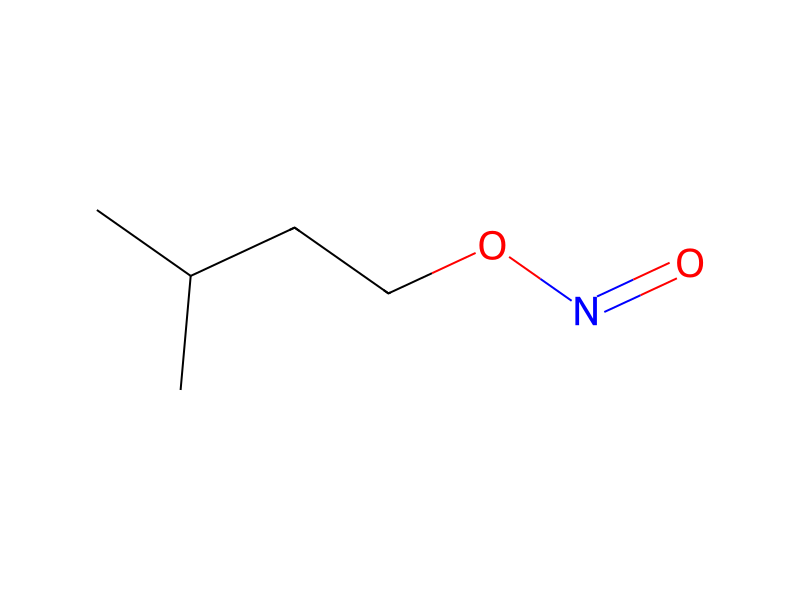
1.0 g (3.04 mmol) of 7-amino-2,4-dioxo-5-phenyl-1,2,3,4-tetrahydropyrido[2,3-d]pyrimidine-6-carbonitrile [Assy, M. G. et al., J. Indian Chem. Soc. 1996, 73 (11), 623-624] was dissolved in 8 ml of DMSO, 0.82 ml (713 mg, 6.09 mmol) of isopentyl nitrite and 818 mg (6.09 mmol) of copper(II) chloride were added and the mixture was stirred at 80° C. overnight. The reaction mixture was cooled, and 6 ml of 1 N hydrochloric acid solution followed by 100 ml of water were then added. The precipitate formed was filtered off and dried under high vacuum. The product was not purified any further (purity according to LC-MS: about 82%).
Workup
- temperatureThe reaction mixture was cooled
- additionwere then added
- customThe precipitate formed
- filtrationwas filtered off
- customdried under high vacuum
- customThe product was not purified any further (purity according to LC-MS: about 82%)
Sources & evidence
- ORD record
- ord-766b6cf442054c8bbb6be97eefcbd55f
- Source dataset
- uspto-grants-2013_12
- Patent number
- US08618119B2
Reaction notes
Loading…