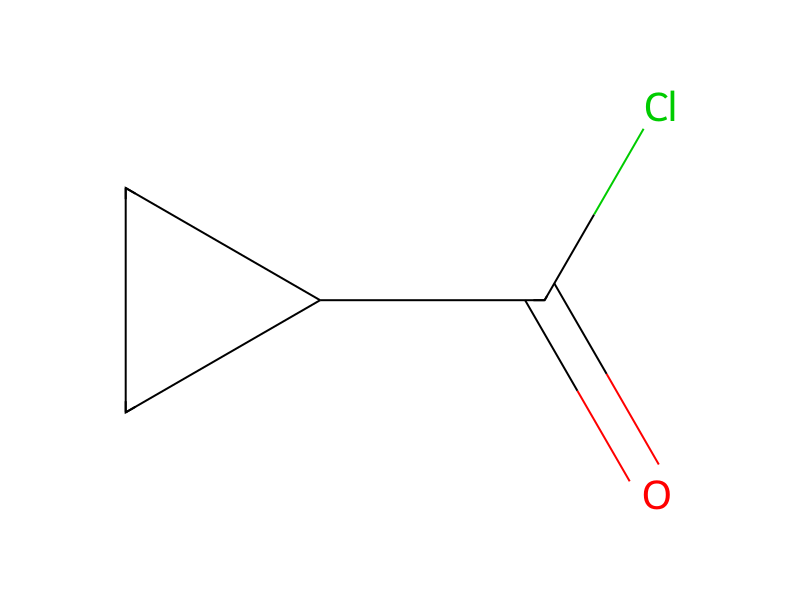
Cyclopropanecarbonyl chloride → AM-156 free acid
Reaction equation

C[O:2][C:3](=[O:27])[CH2:4][C:5]1[CH:6]=[C:7]([C:13]2[CH:18]=[CH:17][C:16]([C:19]([F:22])([F:21])[F:20])=[CH:15][C:14]=2[CH2:23][NH:24][CH2:25][CH3:26])[C:8]([O:11][CH3:12])=[CH:9][CH:10]=1.[CH:28]1([C:31](Cl)=[O:32])[CH2:30][CH2:29]1>>[CH:28]1([C:31]([N:24]([CH2:23][C:14]2[CH:15]=[C:16]([C:19]([F:22])([F:21])[F:20])[CH:17]=[CH:18][C:13]=2[C:7]2[C:8]([O:11][CH3:12])=[CH:9][CH:10]=[C:5]([CH2:4][C:3]([OH:2])=[O:27])[CH:6]=2)[CH2:25][CH3:26])=[O:32])[CH2:30][CH2:29]1Participants
3


Procedure
{2′-[(Cyclopropanecarbonyl-ethyl-amino)-methyl]-6-methoxy-4′-trifluoromethyl-biphenyl-3-yl}-acetic acid (Compound 1-33) was prepared by following the procedures of Example 1 and using (2′-ethylaminomethyl-6-methoxy-4′-trifluoromethyl-biphenyl-3-yl)-acetic acid methyl ester and cyclopropanecarbonyl chloride.
Sources & evidence
- ORD record
- ord-9c7342ab461141e7b9b32566ab6d781f
- Source dataset
- uspto-grants-2012_05
- Patent number
- US08168678B2
Reaction notes
Loading…