Bromoacetyl bromide → N-(2-bromoacetyl)cyclopropanecarboxamide
Reaction equation

[CH:1]1([C:4]([NH2:6])=[O:5])[CH2:3][CH2:2]1.[Br:7][CH2:8][C:9](Br)=[O:10]>O1CCOCC1>[Br:7][CH2:8][C:9]([NH:6][C:4]([CH:1]1[CH2:3][CH2:2]1)=[O:5])=[O:10]Participants
4
Reactant 2
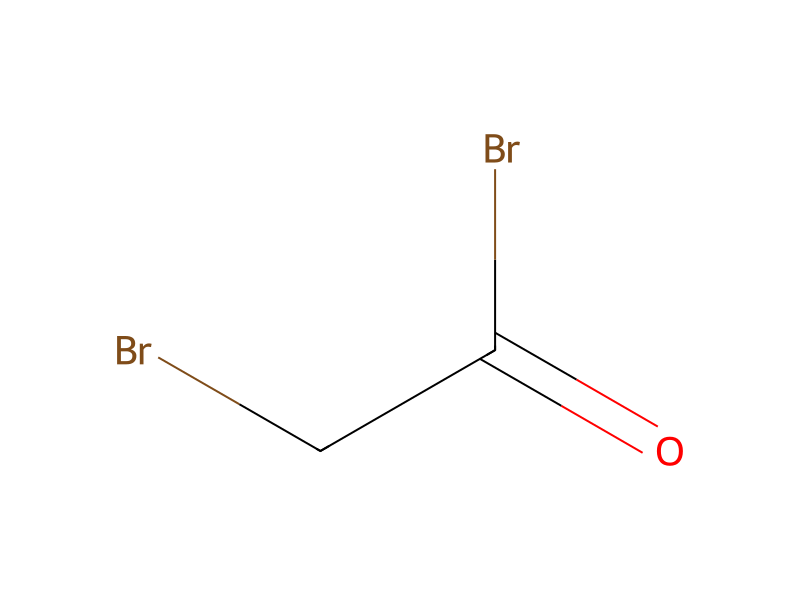

Product 1

Reagents, catalysts & solvents 1

Conditions
- Temperature
- 60 °C
Procedure
Cyclopropanecarboxamide (58.7 g, 690 mmol) in 1,4-Dioxane (1600 ml) was added 2-bromoacetyl bromide (59.9 ml, 690 mmol) at room temperature and stirred for 4 h at 60° C. The reaction mixture was concentrated to dryness. The residue was dissolved in EtOAc and carefully washed with satd. NaHCO3, water then with brine solution, dried over Na2SO4 and concentrated to get N-(2-bromoacetyl)cyclopropanecarboxamide (138 g, 670 mmol, 97% yield) as an off white solid. This material was used without purification. ESI-MS:m/z 208.0 (M+2H)+.
Workup
- concentrationThe reaction mixture was concentrated to dryness
- dissolutionThe residue was dissolved in EtOAc
- washcarefully washed with satd
- dry with materialNaHCO3, water then with brine solution, dried over Na2SO4
- concentrationconcentrated
Sources & evidence
- ORD record
- ord-30325aeabe6e4fcf8b30181cab4b9529
- Source dataset
- uspto-grants-2012_05
- Patent number
- US08178534B2
Reaction notes
Loading…