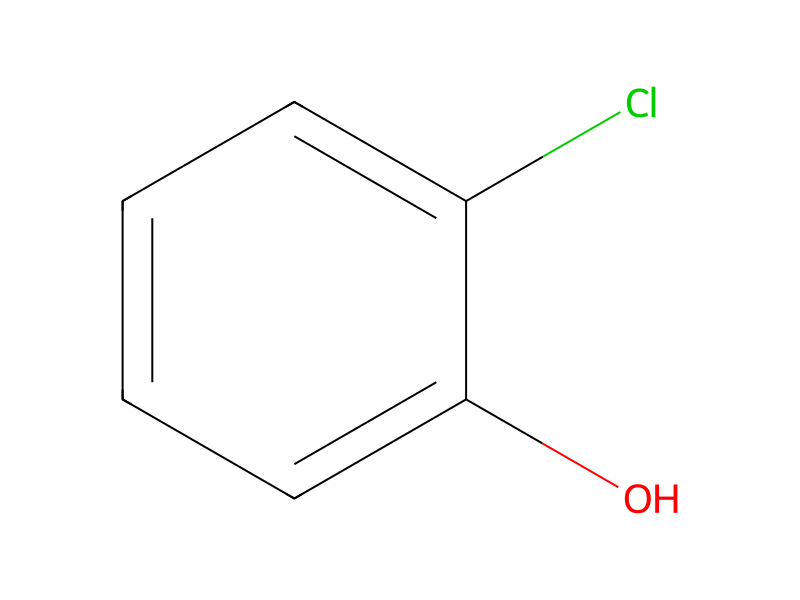
2-Chlorophenol → HCID 86649301, compound
Reaction equation

C(OC(ON1C2C(=CC([O:19][C:20]3[CH:25]=[CH:24][CH:23]=[CH:22][C:21]=3[Cl:26])=CC=2)CC(NC(=O)OC(C)(C)C)C1=O)=O)(C)(C)C.[C:36]1([C:42]([C:63]2[CH:68]=[CH:67][CH:66]=[CH:65][CH:64]=2)=[N:43][C@H:44]([C:56]([O:58][C:59]([CH3:62])([CH3:61])[CH3:60])=[O:57])[CH2:45][C:46]2[C:51]([N+:52]([O-:54])=[O:53])=[CH:50][CH:49]=[C:48](F)[CH:47]=2)[CH:41]=[CH:40][CH:39]=[CH:38][CH:37]=1.ClC1C=CC=CC=1O.C([O-])([O-])=O.[Cs+].[Cs+]>CC#N>[Cl:26][C:21]1[CH:22]=[CH:23][CH:24]=[CH:25][C:20]=1[O:19][C:48]1[CH:47]=[C:46]([C:51]([N+:52]([O-:54])=[O:53])=[CH:50][CH:49]=1)[CH2:45][C@@H:44]([C:56]([O:58][C:59]([CH3:62])([CH3:61])[CH3:60])=[O:57])[N:43]=[C:42]([C:63]1[CH:68]=[CH:67][CH:66]=[CH:65][CH:64]=1)[C:36]1[CH:41]=[CH:40][CH:39]=[CH:38][CH:37]=1Participants
Reactant 4



Product 1

Reagents, catalysts & solvents 1

Conditions
- Temperature
- 70 °C
Procedure
tert-Butyl {1-[(tert-butoxycarbonyl)oxy]-6-(2-chlorophenoxy)-2-oxo-1,2,3,4-tetrahydroquinolin-3-yl}carbamate (83) A mixture of tert-butyl N-(diphenylmethylene)-3-fluoro-6-nitro-L-phenylalaninate (which can be prepared according to the general method described in Example 12) (148 mg, 0.33 mmol), 2-chlorophenol (51 mg, 0.40 mmol), and Cs2CO3 (160 mg, 0.50 mmol) in anhydrous MeCN (5 mL) under N2 was heated to 70° C. for 20 h. The reaction mixture was cooled to RT and concentrated in vacuo. The resulting residue was dissolved in EtOAc (20 mL) and water (20 mL), and the separated aqueous phase was washed with EtOAc (20 mL). The combined organic fractions were washed with saturated aqueous sodium chloride solution (20 mL), dried over Na2SO4, filtered, and concentrated in vacuo to yield tert-butyl 3-(2-chlorophenoxy)-N-(diphenylmethylene)-6-nitrophenylalaninate as a brown oil (180 mg). This residue was dissolved in a solution of HCl in dioxane (4 M, 10 mL), and the resulting solution was heated to 100° C. for 1 h. The reaction mixture was concentrated in vacuo to yield 3-(2-chlorophenoxy)-6-nitrophenylalanine (79 mg) as a solid. This product was converted to the title compound following the general procedure described in Example 9. The product was obtained as a gum (51 mg, 48%). LCMS m/z 505.6 (M+1). 1H NMR (400 MHz, CDCl3) δ 1.46 (s, 9H), 1.56 (br s, 9H), 2.94 (br dd, J=14, 14 Hz, 1H), 3.37 (v br d, J=15 Hz, 1H), 4.48-4.58 (m, 1H), 5.60 (br s, 1H), 6.79 (br s, 1H), 6.88-6.93 (m, 1H), 6.9-7.1 (v br s, 1H), 7.01 (br d, J=8 Hz, 1H), 7.13 (br dd, J=8, 8 Hz, 1H), 7.26 (br dd, J=8, 8 Hz, 1H), 7.47 (br d, J=8 Hz, 1H).
Workup
- customcan be prepared
- temperatureThe reaction mixture was cooled to RT
- concentrationconcentrated in vacuo
- dissolutionThe resulting residue was dissolved in EtOAc (20 mL)
- washwater (20 mL), and the separated aqueous phase was washed with EtOAc (20 mL)
- washThe combined organic fractions were washed with saturated aqueous sodium chloride solution (20 mL)
- dry with materialdried over Na2SO4
- filtrationfiltered
- concentrationconcentrated in vacuo
Sources & evidence
- ORD record
- ord-86d3d725f45b4fa4b7bbb62c7b1310bb
- Source dataset
- uspto-grants-2012_05
- Patent number
- US08183238B2
Reaction notes
Loading…