Thionyl Chloride → HCID 59333778, compound
Reaction equation

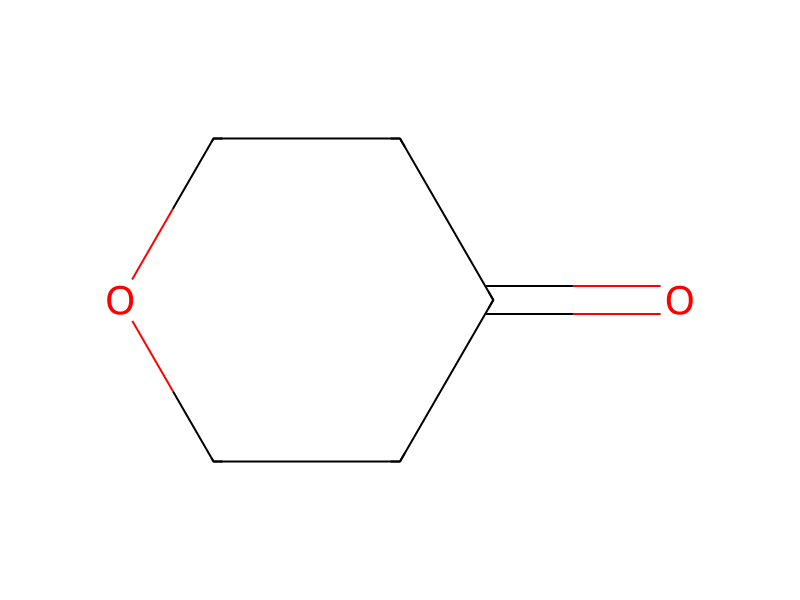
[O:1]=[C:2]1[CH2:6][CH2:5][CH2:4][N:3]1[CH2:7][CH2:8][C:9]([OH:11])=O.S(Cl)(Cl)=O.O=C1CCCN1CCC(Cl)=O.[O:27]1[CH2:32][CH2:31][C:30](=[O:33])[CH2:29][CH2:28]1>>[O:11]=[C:9]([CH:29]1[C:30](=[O:33])[CH2:31][CH2:32][O:27][CH2:28]1)[CH2:8][CH2:7][N:3]1[CH2:4][CH2:5][CH2:6][C:2]1=[O:1]Participants
5



Procedure
3-(2-Oxopyrrolidin-1-yl)propanoic acid (519 mg, 3.3 mmol) was heated to reflux in thionyl chloride (0.365 ml, 5.00 mmol) for 30 min. The excess of thionyl chloride was evaporated and the product, (3-(2-oxopyrrolidin-1-yl)propanoyl chloride (3.3 mmol)) used as such in the next step. 1-(3-oxo-3-(4-oxotetrahydro-2H-pyran-3-yl)propyl)pyrrolidin-2-one (202 mg, 15%) was synthesised from dihydro-2H-pyran-4(3H)-one (0.462 ml, 5.00 mmol) and 3-(2-oxopyrrolidin-1-yl)propanoyl chloride (3.3 mmol) by the general procedure for the preparation of diketones.
Workup
- customThe excess of thionyl chloride was evaporated
Sources & evidence
- ORD record
- ord-e4ca1242ece74fbbbd97f1b2c853f409
- Source dataset
- uspto-grants-2012_05
- Patent number
- US08188101B2
Reaction notes
Loading…