Sodium Carbonate → 2-(2-Fluorophenyl)-5-nitropyridine
Reaction equation

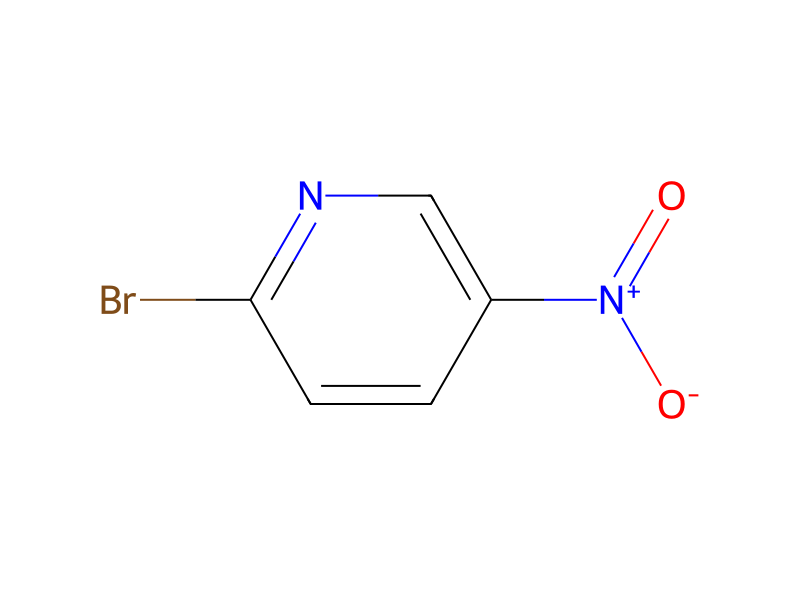
Br[C:2]1[CH:7]=[CH:6][C:5]([N+:8]([O-:10])=[O:9])=[CH:4][N:3]=1.[F:11][C:12]1[CH:17]=[CH:16][CH:15]=[CH:14][C:13]=1B(O)O.C1(P(C2C=CC=CC=2)C2C=CC=CC=2)C=CC=CC=1.C(=O)([O-])[O-].[Na+].[Na+]>C1(C)C=CC=CC=1.C(O)C.C([O-])(=O)C.[Pd+2].C([O-])(=O)C>[F:11][C:12]1[CH:17]=[CH:16][CH:15]=[CH:14][C:13]=1[C:2]1[CH:7]=[CH:6][C:5]([N+:8]([O-:10])=[O:9])=[CH:4][N:3]=1Participants
8
Reactant 4



Product 1

Reagents, catalysts & solvents 3



Procedure
5 g (24.6 mmol) of 2-bromo-5-nitro-pyridine, 3.79 g (27.1 mmol) of 2-fluoro-phenylboronic acid, 276.5 mg (1.23 mmol) of palladium acetate, 646 mg (2.46 mmol) of triphenylphosphine and 24.6 ml of a 1 M aqueous sodium carbonate solution in 150 ml of toluene and 37 ml of ethanol were heated under reflux for 5 h. After cooling, the mixture concentrated under reduced pressure to half of its volume, poured onto water and extracted with ethyl acetate. The combined organic phases were dried and evaporated. The product was purified by chromatography (silica gel, n-heptane/ethyl acetate 5:1). Yield: 4.2 g.
Workup
- temperatureunder reflux for 5 h
- temperatureAfter cooling
- concentrationthe mixture concentrated under reduced pressure to half of its volume
- additionpoured onto water
- extractionextracted with ethyl acetate
- customThe combined organic phases were dried
- customevaporated
- customThe product was purified by chromatography (silica gel, n-heptane/ethyl acetate 5:1)
Sources & evidence
- ORD record
- ord-229beb32bea84fcba3cbd3db11df6b16
- Source dataset
- uspto-grants-2012_05
- Patent number
- US08188291B2
Reaction notes
Loading…