Potassium Carbonate → 2-Methyl-3-nitropyridine
Reaction equation

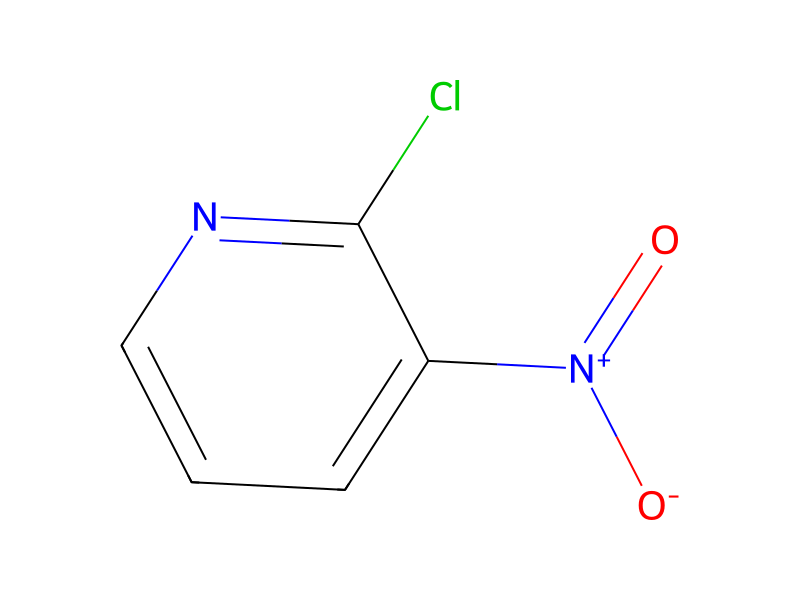
Cl[C:2]1[C:7]([N+:8]([O-:10])=[O:9])=[CH:6][CH:5]=[CH:4][N:3]=1.[CH3:11]B(O)O.C(=O)([O-])[O-].[K+].[K+]>O1CCOCC1.C1C=CC([P]([Pd]([P](C2C=CC=CC=2)(C2C=CC=CC=2)C2C=CC=CC=2)([P](C2C=CC=CC=2)(C2C=CC=CC=2)C2C=CC=CC=2)[P](C2C=CC=CC=2)(C2C=CC=CC=2)C2C=CC=CC=2)(C2C=CC=CC=2)C2C=CC=CC=2)=CC=1>[CH3:11][C:2]1[C:7]([N+:8]([O-:10])=[O:9])=[CH:6][CH:5]=[CH:4][N:3]=1Participants
6





Procedure
A solution of 2-chloro-3-nitropyridine (20 g, 0.126 mol), methylboronic acid (8.3 g, 0.139 mol), tetrakis(triphenylphosphine)palladium (0) (14.58 g, 0.013 mol) and potassium carbonate (52.3 g, 0.378 mol) in anhydrous 1,4-dioxane (100 ml) was refluxed for 2 days. The reaction mixture was cooled to room temperature, filtered, and concentrated under reduced pressure. The resulting residue was purified with silica gel column chromatography (ethyl acetate/n-hexane=1/3, v/v) to give 14 g of the titled compound as brown oil.
Workup
- filtrationfiltered
- concentrationconcentrated under reduced pressure
- customThe resulting residue was purified with silica gel column chromatography (ethyl acetate/n-hexane=1/3
Sources & evidence
- ORD record
- ord-5e063897c4364cf882a86bdc1d2be7c6
- Source dataset
- uspto-grants-2012_05
- Patent number
- US08188114B2
Reaction notes
Loading…