Hydrochloric Acid → HCID 10965199, compound
Reaction equation

[F:1][C:2]1[CH:7]=[CH:6][C:5]([S:8][CH3:9])=[CH:4][CH:3]=1.[Cl-].[Al+3].[Cl-].[Cl-].[CH3:14][C:15](OCC1C2C(=CC=CC=2)C(COC(C)=O)=C2C=1C=CC=C2)=[O:16].Cl>O.C(=S)=S>[F:1][C:2]1[CH:3]=[CH:4][C:5]([S:8][CH3:9])=[C:6]([C:15](=[O:16])[CH3:14])[CH:7]=1Participants
Reactant 4

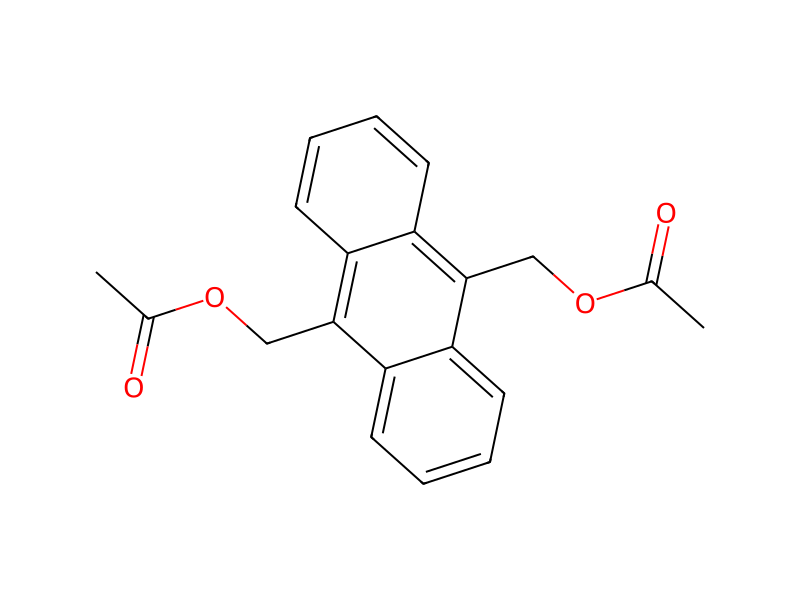


Product 1

Reagents, catalysts & solvents 2


Procedure
A mixture of 4-fluorothioanisole (19c) (4 g, 28.13 mmol), anhydrous aluminium chloride (8.40 g, 63.02 mmol) and carbon disulphide (89 ml) was heated at reflux under argon atmosphere, and acetic arhydride (2.65 ml, 28.07 mmol) was added dropwise in 2 h. After refluxing for 24h, the solution was poured into crushed ice, water (62.48 ml) and concentrated hydrochloric acid (2.68 ml). The organic phase was separated and water extracted with dichloromethane (3×30 ml), the organic layers were washed with brine, dried and concentrated. The oily residue was chromatographed (50% petroleum ether 40-60° in dichloromethane) to afford 20c (2.98 g) as a colourless crystalline solid, mp 82.0-84.3° C. (58% yield). 1H NMR (CDCl3) δ7.49-7.43 (dd, 1H, J=9.23, 2.44 Hz); 7.29-7.11 (m, 2H); 2.57 (s, 3H); 2.39 (s, 3H).
Workup
- temperaturewas heated
- temperatureat reflux under argon atmosphere
- additionthe solution was poured
- customThe organic phase was separated
- extractionwater extracted with dichloromethane (3×30 ml)
- washthe organic layers were washed with brine
- customdried
- concentrationconcentrated
- customThe oily residue was chromatographed (50% petroleum ether 40-60° in dichloromethane)
Sources & evidence
- ORD record
- ord-384ccae2082740e484f405853a213b02
- Source dataset
- uspto-grants-2002_05
- Patent number
- US06391870B2
Reaction notes
Loading…