1,1,1,2-Tetrachloroethane → HCID 11122187, compound
Reaction equation

[Cl-].[Al+3].[Cl-].[Cl-].CO[C:7]1([CH:14]=[C:13]([CH3:15])[C:11]([O:16]C)(O)[C:10]([CH3:18])=[C:9]1[CH3:19])[OH:8].[Br:20][C:21]([CH3:26])([CH3:25])[C:22](Br)=[O:23].CCCCC[CH2:32][CH3:33].C(OCC)(=[O:36])C.Cl[CH2:41][C:42](Cl)(Cl)Cl>>[Br:20][C:21]([CH3:26])([CH3:25])[C:22]([O:8][C:7]1[C:41]([CH3:42])=[C:32]([CH3:33])[C:18]2[O:36][C:13]([CH3:14])([CH3:15])[C:11](=[O:16])[C:10]=2[C:9]=1[CH3:19])=[O:23]Participants





Conditions
- Temperature
- 70 °C
Procedure
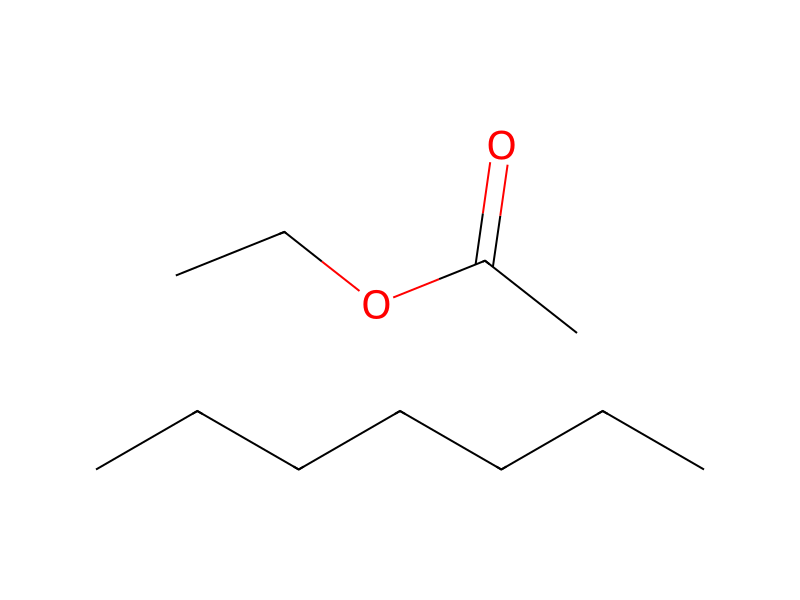
Aluminium chloride (25 g, 188 mmol) is added portionwise at 0° C. and under nitrogen to a solution of 1,4-dimethoxy-2,3,5-trimethyihydroquinone (33.83 g, 188 mmol) and 2-bromo-2-methylpropionylbromide (129.46 g, 563 mmol) in tetrachloroethane (188 mL). The dark solution is then heated at 70° C. until completion of the reaction (3-5 days) as indicated by TLC (heptane/ethyl acetate 90:10). The reaction is quenched by careful addition of ice. The black mixture is acidified to pH 1 with concentrated hydrochloric acid and extracted with dichloromethane (2×150 mL). The organic phase is washed with water (150 mL), 10% potassium bicarbonate (2×150 mL), dried (magnesium sulfate) and evaporated to dryness. The residue (106 g) is triturated in heptane in the aim to precipitate the 1,4-di-(2-bromo-2-methylpropionoxy)-2,3,5-trimethylhydroquinone formed during the reaction and filtered off (30.15 g). The filtrate is evaporated to dryness and the residue (66.37 g) is passed through a small pad of silica gel eluting with heptane/ethyl acetate 95:5 to give 39.78 g of crude 5-(2-bromo-2-methylpropionoxy)-2,2,4,6,7-pentamethyl-2,3-dihydro-1-benzofuran-3-one (Rf=0.4 heptane/ethyl acetate 90:10). The yellow solid is dissolved in a mixture of methanol/tetrahydrofuran (400 mL, 1:1) and sodium hydroxide (20 g, 500 mmol) in water (100 mL) is added dropwise under nitrogen. The solution is stirred for 4 hrs at 60° C. and overnight at room temperature. The black mixture is then acidified with concentrated hydrochloric acid. Most of the solvent is evaporated under reduced pressure and the residue is taken up in ethyl acetate (300 mL). The organic phase is washed with water (150 mL), 10% sodium bicarbonate (2×150 mL), brine, dried (magnesium sulfate) and evaporated to dryness to give 22.39 g of the crude 5-hydroxy-2,2,4,6,7-pentamethyl-2,3-dihydro-1-benzofuran-3-one as a yellow powder. A sample is recrystallized in heptane/di-isopropyloxide, mp=142° C.-144° C. Rf=0.29 (heptane/ethyl acetate 80:20)
Workup
- customThe reaction is quenched by careful addition of ice
- extractionextracted with dichloromethane (2×150 mL)
- washThe organic phase is washed with water (150 mL), 10% potassium bicarbonate (2×150 mL)
- dry with materialdried (magnesium sulfate)
- customevaporated to dryness
- customThe residue (106 g) is triturated in heptane in the aim
- customto precipitate the 1,4-di-(2-bromo-2-methylpropionoxy)-2,3,5-trimethylhydroquinone
- customformed during the reaction
- filtrationfiltered off (30.15 g)
- customThe filtrate is evaporated to dryness
Sources & evidence
- ORD record
- ord-d424bef6e0e74965b1080108498d1208
- Source dataset
- uspto-grants-1997_12
- Patent number
- US05698696
Reaction notes
Loading…