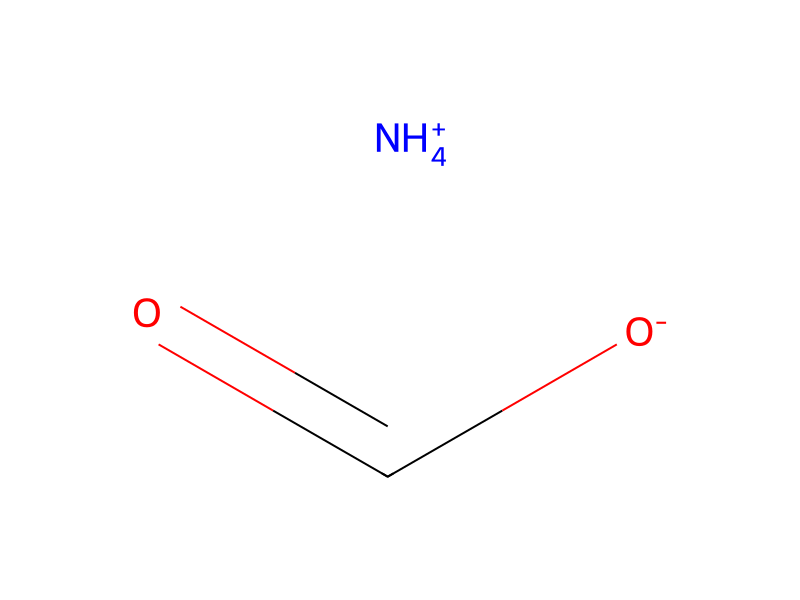
Ammonium formate → HCID 21462997, compound
Reaction equation

[N:1]1[CH:6]=[CH:5][C:4]([CH:7]=[CH:8][C:9]2[O:10][CH:11]=[CH:12][CH:13]=2)=[CH:3][CH:2]=1.C([O-])=O.[NH4+]>CO.[Pd]>[N:1]1[CH:6]=[CH:5][C:4]([CH2:7][CH2:8][C:9]2[O:10][CH:11]=[CH:12][CH:13]=2)=[CH:3][CH:2]=1Participants
Reactant 2

Product 1

Reagents, catalysts & solvents 2


Procedure
A solution of 1-(pyridin-4-yl)-2-(furan-2-yl)ethene (8 g, 46.8 mmol) in methanol (200 ml) was treated with ammonium formate (14.7 g, 234.0 mmol). 10% Palladium on charcoal catalyst (400 mg, 5% (w/w)) was added and the mixture was stirred at reflux for five hours. The catalyst was filtered off and the solvent evaporated. The residue was partitioned between dichloromethane and water. The organic layer was separated, dried (MgSO4) and evaporated to give a beige oil. This material was chromatographed on silica gel with a gradient of ethyl acetate in hexane (50%-100%) as eluant to afford the title compound as a colourless oil (2.5 g, 31%); δH (DMSO-d6) 2.94-3.06 (4H, m, 2×CH2), 6.06-6.12 (1H, m, furanyl H), 6.32-6.38 (1H, m, furanyl H), 7.20-7.28 (2H, m, pyridinyl H), 7.50-7.56 (1H, m, furanyl H), and 8.40-8.50 (2H, m, pyridinyl H).
Workup
- temperatureat reflux for five hours
- filtrationThe catalyst was filtered off
- customthe solvent evaporated
- customThe residue was partitioned between dichloromethane and water
- customThe organic layer was separated
- dry with materialdried (MgSO4)
- customevaporated
- customto give a beige oil
- customThis material was chromatographed on silica gel with a gradient of ethyl acetate in hexane (50%-100%) as eluant
Sources & evidence
- ORD record
- ord-c27bdad2c0de44bf9577e1cfb586530b
- Source dataset
- uspto-grants-1997_12
- Patent number
- US05700809
Reaction notes
Loading…