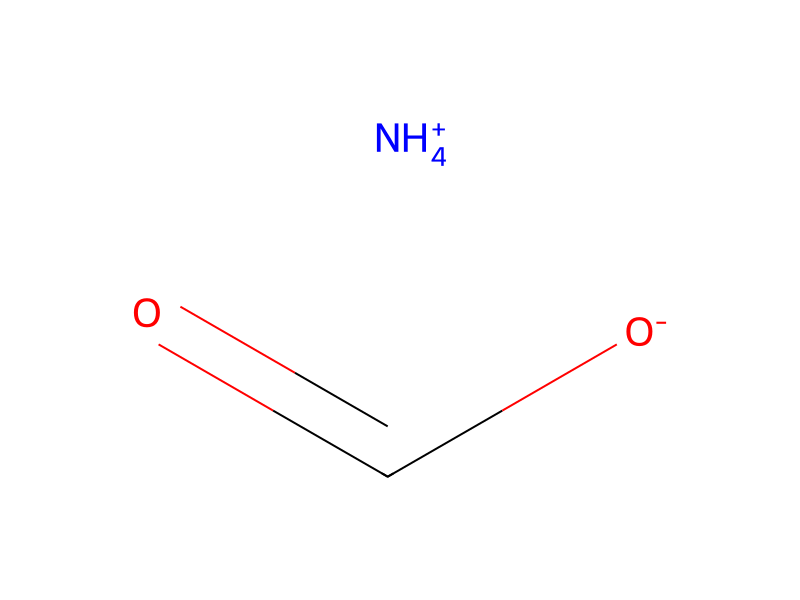
Ammonium formate → HCID 21463007, compound
Reaction equation

[N:1]1[CH:6]=[CH:5][C:4]([CH:7]=[CH:8][C:9]2[O:10][CH:11]=[CH:12][CH:13]=2)=[CH:3][CH:2]=1.C([O-])=O.[NH4+]>CO.[Pd]>[O:10]1[CH2:11][CH2:12][CH2:13][CH:9]1[CH2:8][CH2:7][C:4]1[CH:3]=[CH:2][N:1]=[CH:6][CH:5]=1Participants
Reactant 2

Product 1

Reagents, catalysts & solvents 2


Procedure
A solution of 1-(pyridin-4-yl)-2-(furan-2-yl)ethene (15.0 g, 87.7 mmol) [Example 18, Step 1] in methanol (300 ml) was treated with ammonium formate (27.6 g, 438.5 mmol) and 10% palladium on charcoal catalyst (1.5 g, 10% (w/w)). The mixture was stirred at reflux for 3 hours. The catalyst was removed by filtration and the solvent was evaporated in vacuo. The residue was partitioned between dichloromethane and water. The organic phase was separated, dried (MgSO4) and evaporated in vacuo. The residue was chromatographed with 1:1 hexane/ethyl acetate as eluant to afford the title compound as a colourless oil (3.0 g, 19%); δH (DMSO-d6) 1.35-1.50 (1H, m, tetrahydrofuranyl H), 1.70-2.00 (5H, m, CH2 and 3×tetrahydrofuranyl H), 2.54-2.76 (2H, m, CH2), 3.54-3.82 (3H, m, tetrahydrofuranyl H), 7.22 (2H, d, J 7.1 Hz, ArH), and 8.46 (2H, d J 7.0 Hz, ArH); m/z (CI+, NH3) 178 (M+1)+.
Workup
- temperatureat reflux for 3 hours
- customThe catalyst was removed by filtration
- customthe solvent was evaporated in vacuo
- customThe residue was partitioned between dichloromethane and water
- customThe organic phase was separated
- dry with materialdried (MgSO4)
- customevaporated in vacuo
- customThe residue was chromatographed with 1:1 hexane/ethyl acetate as eluant
Sources & evidence
- ORD record
- ord-03783a03ad3440de88508358eaf489fa
- Source dataset
- uspto-grants-1997_12
- Patent number
- US05700809
Reaction notes
Loading…