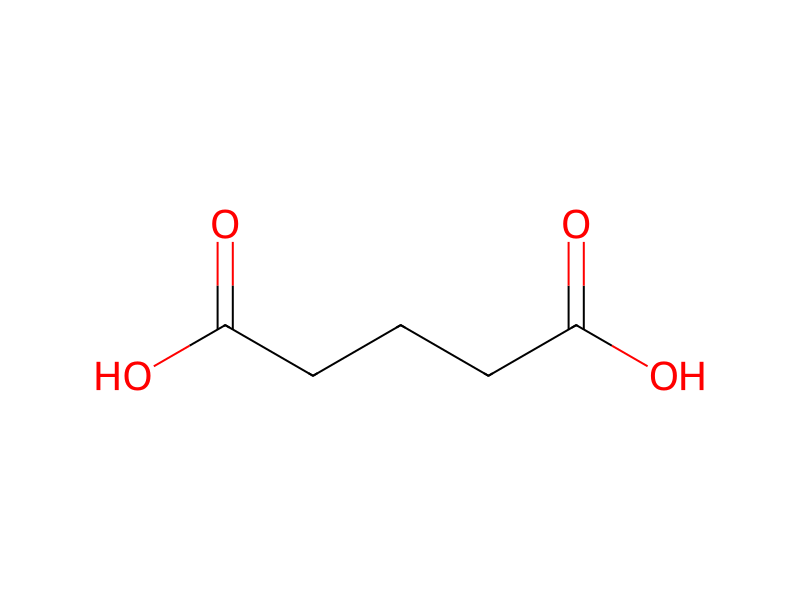
Glutaric Acid → 4-(4,5,7-Trifluorobenzothiazol-2-yl)butanoic acid
Reaction equation

[NH2:1][C:2]1[C:7]([F:8])=[C:6]([F:9])[CH:5]=[C:4]([F:10])[C:3]=1[SH:11].[C:12](O)(=O)[CH2:13][CH2:14][CH2:15][C:16]([OH:18])=[O:17]>CN1CCCC1=O.O>[F:8][C:7]1[C:2]2[N:1]=[C:12]([CH2:13][CH2:14][CH2:15][C:16]([OH:18])=[O:17])[S:11][C:3]=2[C:4]([F:10])=[CH:5][C:6]=1[F:9]Participants
5
Reactant 2

Product 1

Reagents, catalysts & solvents 2


Conditions
- Temperature
- 100 °C
Procedure
2-Amino-3,4,6-trifluorothiophenol (200 mg, 1.1 mmol) was dissolved in N-methylpyrrolidone (NMP, 1 ml) under a nitrogen stream. To the resultant solution was gradually added glutaric acid (127 mg, 1.1 mmol) at room temperature and the mixture was stirred at 100° C. for 6 hours. After naturally cooling, the mixture was diluted with water and extracted with ethyl acetate. The organic phase was washed with aqueous sodium bicarbonate. The alkaline phase was acidified with 10% hydrochloric acid and re-extracted with ethyl acetate. The combined organic phases were dried and then evaporated to yield a residue, which was recrystallized from acetonitrile to give 4-(4,5,7-trifluorobenzothiazol-2-yl)butanoic acid (133 mg, 44%).
Workup
- customat room temperature
- temperatureAfter naturally cooling
- extractionextracted with ethyl acetate
- washThe organic phase was washed with aqueous sodium bicarbonate
- extractionre-extracted with ethyl acetate
- customThe combined organic phases were dried
- customevaporated
- customto yield a residue, which
- customwas recrystallized from acetonitrile
Sources & evidence
- ORD record
- ord-3279c40a7ebb409aa932f9b8fab5af1d
- Source dataset
- uspto-grants-1997_12
- Patent number
- US05700819
Reaction notes
Loading…