2-Pyrazinecarboxylic acid → 3-[(Pyrazine-2-carbonyl)-amino]adamantane-1-carboxylic acid
반응식

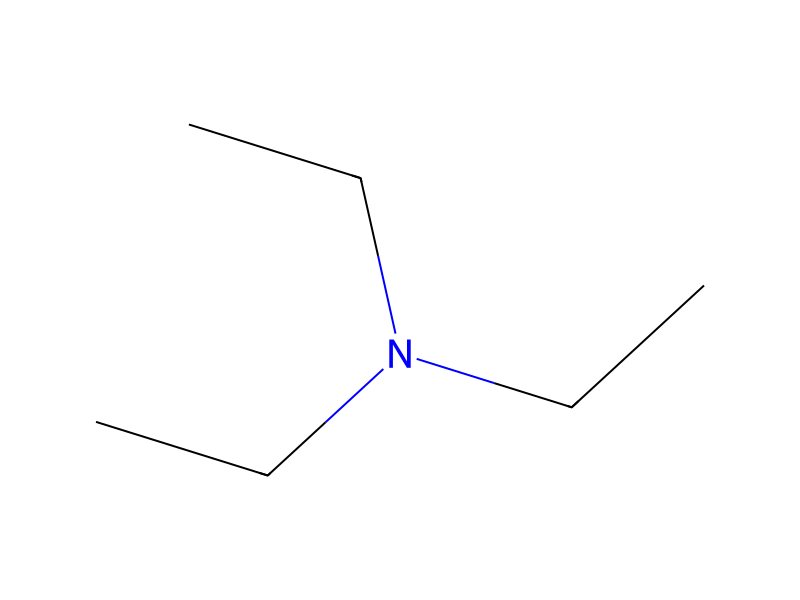
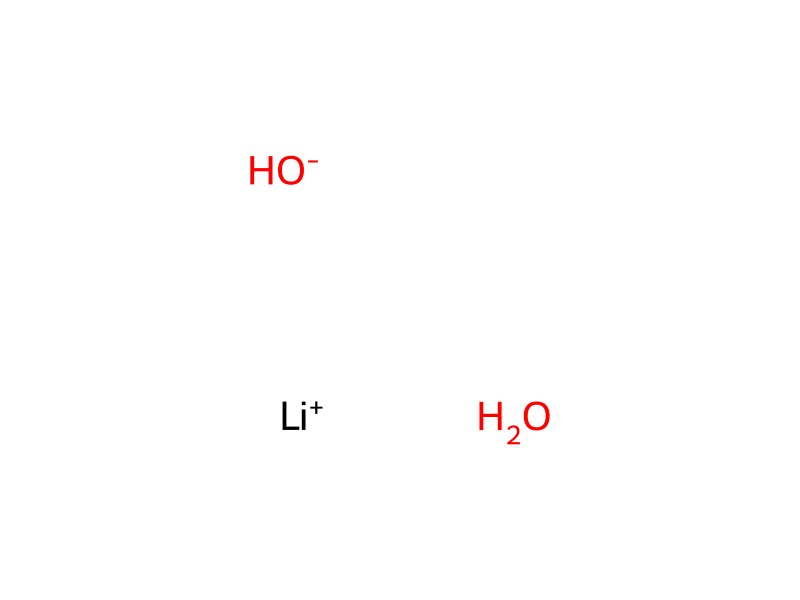
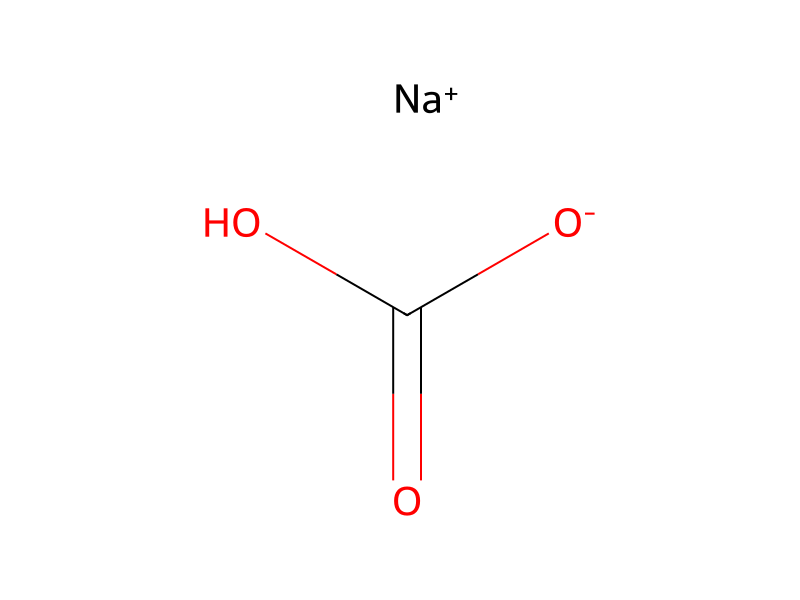
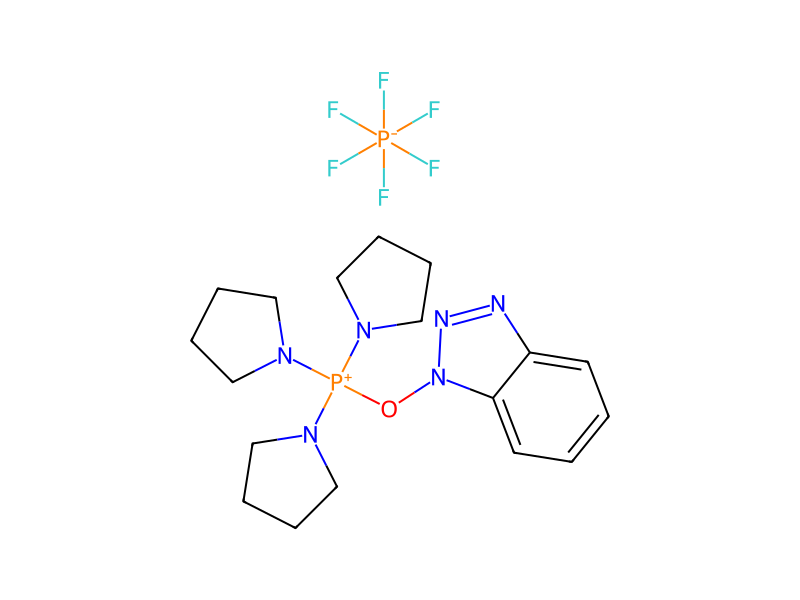
Cl.C[O:3][C:4]([C:6]12[CH2:15][CH:10]3[CH2:11][CH:12]([CH2:14][C:8]([NH2:16])([CH2:9]3)[CH2:7]1)[CH2:13]2)=[O:5].[N:17]1[CH:22]=[CH:21][N:20]=[CH:19][C:18]=1[C:23](O)=[O:24].C1CN([P+](ON2N=NC3C=CC=CC2=3)(N2CCCC2)N2CCCC2)CC1.F[P-](F)(F)(F)(F)F.C(N(CC)CC)C.C(=O)(O)[O-].[Na+].O.[OH-].[Li+]>C(Cl)Cl>[N:17]1[CH:22]=[CH:21][N:20]=[CH:19][C:18]=1[C:23]([NH:16][C:8]12[CH2:9][CH:10]3[CH2:11][CH:12]([CH2:13][C:6]([C:4]([OH:3])=[O:5])([CH2:15]3)[CH2:7]1)[CH2:14]2)=[O:24]참가 물질
반응물 6


생성물 1

시약·촉매·용매 1
실험 절차
To a round bottom flask was added 3-amino-adamantane-1-carboxylic acid methyl ester hydrochloride (7.00 g, 28.5 mmol), 2-pyrazinecarboxylic acid (3.71 g, 29.9 mmol) and methylene chloride (200 mL). The mixture was stirred vigorously and treated with PyBOP® (15.6 g, 29.9 mmol) followed by triethylamine (9.9 mL, 71 mmol), and then stirred at room temperature for 16 hours. To the reaction was added saturated aqueous sodium bicarbonate (200 mL) and the biphasic mixture was stirred vigorously for a few minutes, then transferred to a 1-L separatory funnel. The mixture was extracted, the layers separated and the aqueous layer was extracted again with methylene chloride (200 mL). The combined organic layers were washed with brine, dried over sodium sulfate, filtered and concentrated under reduced pressure. The residue was then dissolved in tetrahydrofuran (200 mL) and water (200 mL) was added. To the biphasic mixture was added lithium hydroxide monohydrate (5.38 g, 128 mmol), and the resultant mixture stirred vigorously at room temperature for 22 hours. Most of the volatiles were removed under reduced pressure and the resulting aqueous solution was transferred to a 500-mL separatory funnel and washed with methylene chloride (3×150 mL). The aqueous layer was diluted with water (200 mL) and the pH was adjusted to about 3-4 by adding solid citric acid monohydrate. A voluminous white precipitate appeared that was filtered, washed with water and dried under high vacuum at 50° C. to afford 8.11 g (95%) of the title compound, 3-[(pyrazine-2-carbonyl)-amino]-adamantane-1-carboxylic acid, as a white solid. 1H NMR (300 MHz, CDCl3) δ 11.14-10.07 (br s, 1H), 9.38 (d, J=1.5 Hz, 1H), 8.74 (d, J=2.5 Hz, 1H), 8.50 (dd, J=2.4, 1.5 Hz, 1H), 7.68 (br s, 1H), 2.35-2.25 (m, 4H), 2.23-2.08 (m, 4H), 2.00-1.86 (m, 4H), 1.81-1.64 (m, 2H). ESI-MS m/z: 301.9 (M+H)+.
후처리
- stirringstirred at room temperature for 16 hours
- stirringthe biphasic mixture was stirred vigorously for a few minutes
- customtransferred to a 1-L separatory funnel
- extractionThe mixture was extracted
- customthe layers separated
- extractionthe aqueous layer was extracted again with methylene chloride (200 mL)
- washThe combined organic layers were washed with brine
- dry with materialdried over sodium sulfate
- filtrationfiltered
- concentrationconcentrated under reduced pressure
- dissolutionThe residue was then dissolved in tetrahydrofuran (200 mL)
- additionwater (200 mL) was added
- customMost of the volatiles were removed under reduced pressure
- customthe resulting aqueous solution was transferred to a 500-mL separatory funnel
- washwashed with methylene chloride (3×150 mL)
- additionThe aqueous layer was diluted with water (200 mL)
- additionby adding solid citric acid monohydrate
- filtrationthat was filtered
- washwashed with water
- customdried under high vacuum at 50° C.
출처 및 근거
- ORD 기록
- ord-3601424cb4f84e5c9c0d37063979a6f8
- 출처 데이터셋
- uspto-grants-2013_03
- 특허 번호
- US08389519B2
반응 노트
불러오는 중…