Sodium Chloride → 5-(Hydroxymethyl)furfural
Reaction equation

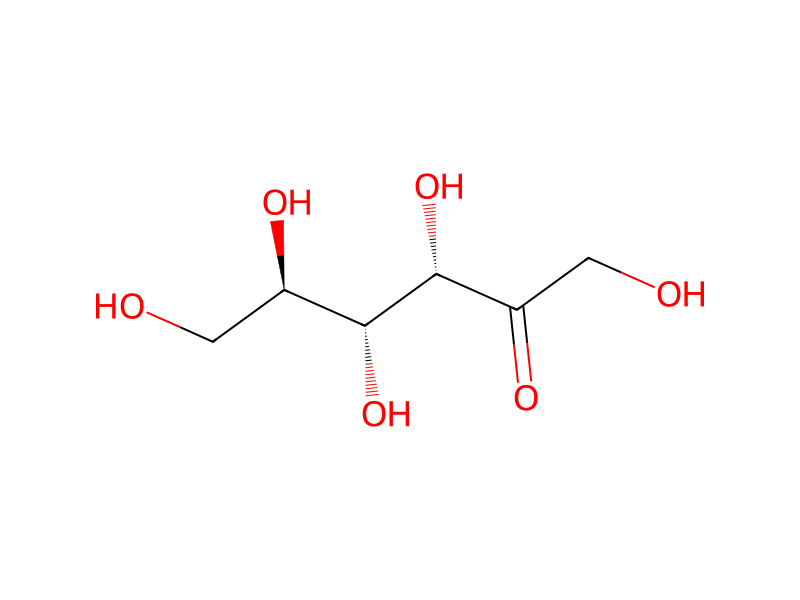
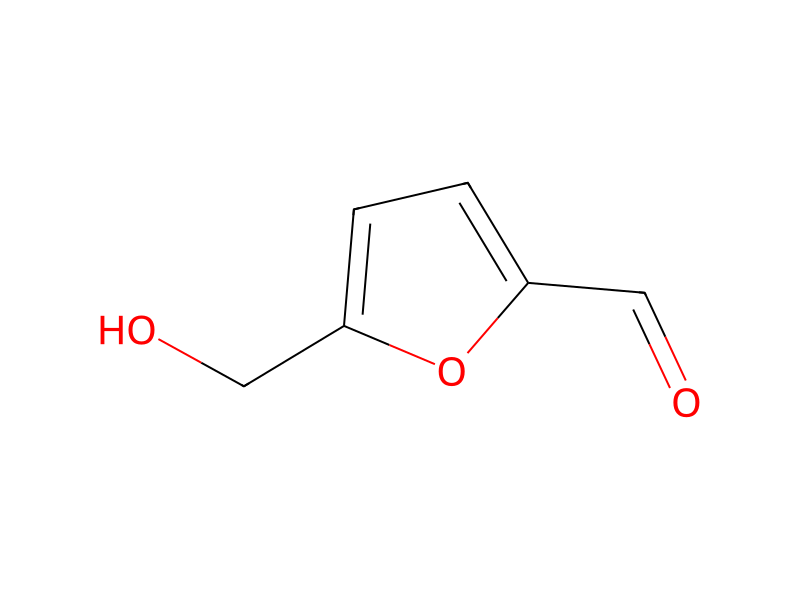
[Na+].[Cl-].[OH:3][CH2:4][C:5]([C@H:7]([C@@H:9]([C@@H:11]([CH2:13][OH:14])[OH:12])O)O)=O.C(C1C=CC=CC=1O)(CC)C>>[OH:3][CH2:4][C:5]1[O:12][C:11]([CH:13]=[O:14])=[CH:9][CH:7]=1Participants


Procedure
Dehydration of fructose in aqueous solutions to obtain 5-hydroxymethylfurfural (HMF) is carried out using mineral acids, such as HCl. An organic extracting solvent, 2-sec-butylphenol (SBP), is used to extract HMF continuously to separate it from fructose and the mineral acid and to inhibit further degradation. The experiments were carried out in 10 mL glass reactors at 170° C. in a pre-heated oil bath using magnetic stifling. In a typical experiment, an aqueous fructose solution with a desired weight percentage was prepared to obtain a 0.1 M HCl and saturated with NaCl. The aqueous fructose solution and SBP were added into the glass reactor to reach the desired mass ratio (aqueous layer (g)/SBP (g)). To end the reactions, the glass reactors were taken out from the oil bath and cooled in an ethylene glycol/dry ice bath. The two phases were then separated and analyzed to quantify HMF and fructose using HPLC. Using 1.5 g of aqueous solution (7.8% fructose) and 3 g of SBP, at 170° C., in 5 min, 74% yield of HMF was obtained with complete conversion of fructose. 97% of HMF was retained in SBP. Short residences times are used to minimize the conversion of HMF to LA in this step.
Workup
- temperaturecooled in an ethylene glycol/dry ice bath
- customThe two phases were then separated
Sources & evidence
- ORD record
- ord-cc0b390df9dd48f5b6c85b946d0dcc9e
- Source dataset
- uspto-grants-2013_03
- Patent number
- US08389749B2
Reaction notes
Loading…