Water → [1,2,5]Thiadiazolo[3,4-b]pyridine-6-carbaldehyde
Reaction equation

C1(/C=[CH:8]/[C:9]2[CH:14]=[N:13][C:12]3=[N:15][S:16][N:17]=[C:11]3[CH:10]=2)C=CC=CC=1.C[N+]1([O-])CC[O:22]CC1.O.I([O-])(=O)(=O)=O.[Na+]>[Os](=O)(=O)(=O)=O.O.CC(C)=O>[N:17]1[S:16][N:15]=[C:12]2[C:11]=1[CH:10]=[C:9]([CH:8]=[O:22])[CH:14]=[N:13]2Participants
Reactant 4

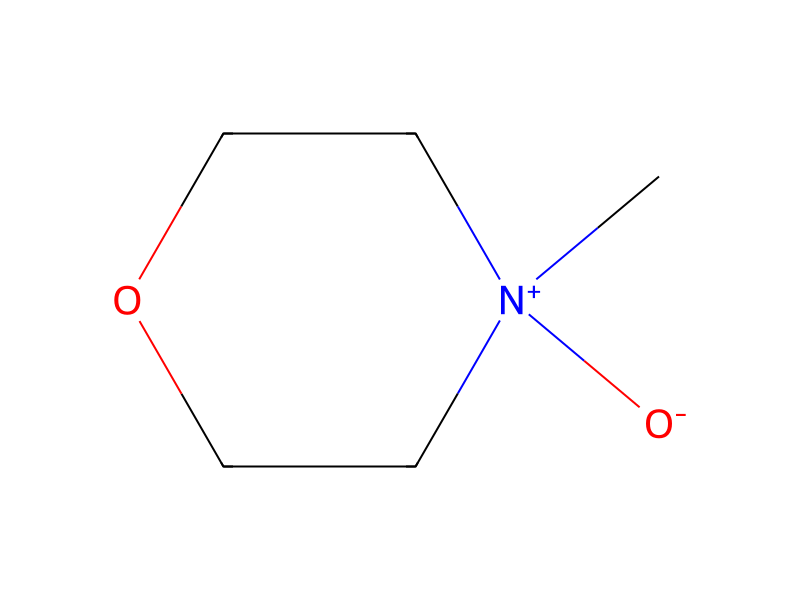


Product 1

Reagents, catalysts & solvents 3


Procedure
To 6-[(E)-2-phenylethenyl][1,2,5]thiadiazolo[3,4-b]pyridine (0.88 g, 3.68 mmol) was added acetone (30 ml), N-methyl-morpholine-N-oxide, 50 wt. % in water (1.525 ml, 7.35 mmol) and then osmium tetroxide in water (0.225 ml, 0.037 mmol). The reaction was then stirred for 20 hours. To the pale brown solution was added sodium periodate (3.15 g, 14.71 mmol) and stirring continued for 45 mins. The solvent was reduced by rotary evaporation and the remainder partitioned between chloroform and water. The aqueous was further extracted with chloroform and the combined organic extracts passed through a hydrophobic frit and concentrated to give brown/black solid (0.6 g). A portion of this material (0.575 g) was purified by chromatography on silica eluting with 20% EtOAc in cyclohexane to a pale yellow solid (160 mg).
Workup
- stirringstirring
- waitcontinued for 45 mins
- customThe solvent was reduced by rotary evaporation
- customthe remainder partitioned between chloroform and water
- extractionThe aqueous was further extracted with chloroform
- concentrationconcentrated
Sources & evidence
- ORD record
- ord-c6af9bcf5f2141ba9d52ca1a3bb07de5
- Source dataset
- uspto-grants-2013_03
- Patent number
- US08389524B2
Reaction notes
Loading…