Ammonium Hydroxide → 6-Chloro-4-methylpyridazin-3-amine
Reaction equation

Cl[C:2]1[N:3]=[N:4][C:5]([Cl:9])=[CH:6][C:7]=1[CH3:8].[OH-].[NH4+].ClC1N=[N:17]C(N)=CC=1C>>[Cl:9][C:5]1[N:4]=[N:3][C:2]([NH2:17])=[C:7]([CH3:8])[CH:6]=1Participants
4

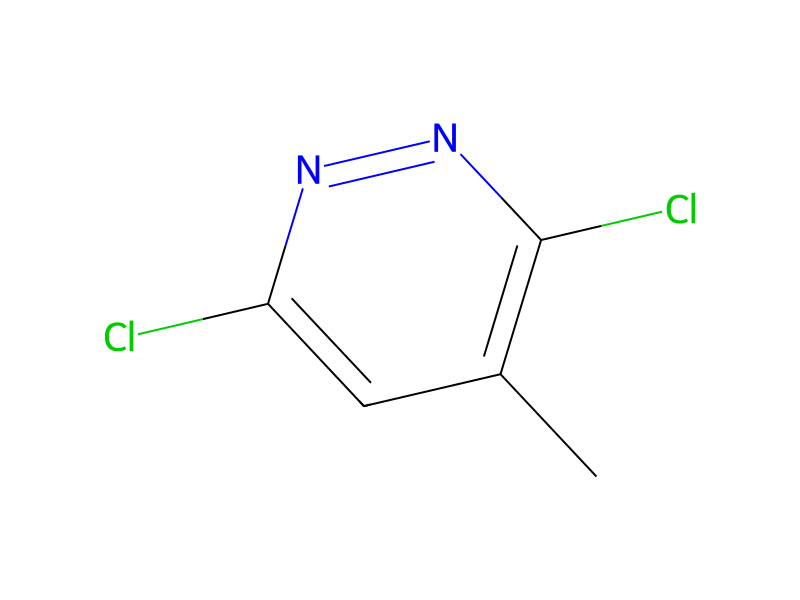


Conditions
- Temperature
- 100 °C
Procedure
A 20 mL microwave vial was charged with, a stir bar, 3,6-dichloro-4-methylpyridazine (4.0 g, 24.54 mmol) and 14 mL of a new, freshly opened bottle of ammonium hydroxide. The vial was quickly sealed. The solution was heated in a microwave (Personal Chemistry, Emrys Optimizer) to 100° C. for 3 h. The vial was cooled, opened, and a stream of nitrogen was used to remove excess ammonium hydroxide. Water was added, the solid was collected by filtration, washed with water and dried to provide a mixture of 6-chloro-5-methylpyridazin-3-amine and 6-chloro-4-methylpyridazin-3-amine (3 g, 20.90 mmol, 85% yield). The mixture was used without further purification.
Workup
- additionA 20 mL microwave vial was charged with, a stir bar
- customThe vial was quickly sealed
- temperatureThe vial was cooled
- customto remove excess ammonium hydroxide
- additionWater was added
- filtrationthe solid was collected by filtration
- washwashed with water
- customdried
- customto provide
Sources & evidence
- ORD record
- ord-17f349d1596a4a1d8a51fa6bcf729892
- Source dataset
- uspto-grants-2013_03
- Patent number
- US08389527B2
Reaction notes
Loading…