Pyridine → 3-Methylcarbamoylisoxazol-5-ylmethyl 4-nitrophenyl carbonate
Reaction equation

Cl[C:2]([O:4][C:5]1[CH:10]=[CH:9][C:8]([N+:11]([O-:13])=[O:12])=[CH:7][CH:6]=1)=[O:3].[CH3:14][NH:15][C:16]([C:18]1[CH:22]=[C:21]([CH2:23][OH:24])[O:20][N:19]=1)=[O:17].N1C=CC=CC=1>ClCCl>[C:2](=[O:3])([O:4][C:5]1[CH:6]=[CH:7][C:8]([N+:11]([O-:13])=[O:12])=[CH:9][CH:10]=1)[O:24][CH2:23][C:21]1[O:20][N:19]=[C:18]([C:16](=[O:17])[NH:15][CH3:14])[CH:22]=1Participants
5

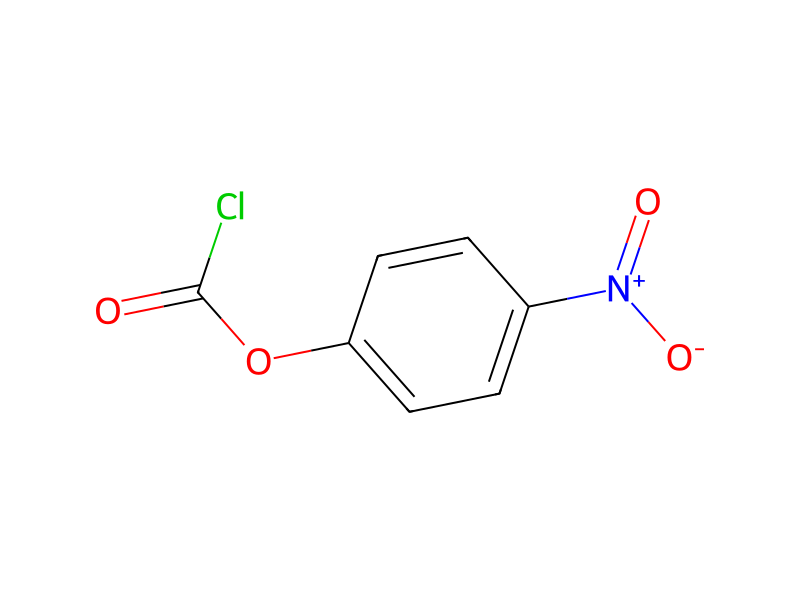



Conditions
- Temperature
- 0 °C
Procedure
2.58 g (12.81 mmoles) of 4-nitrophenyl chloroformate are added in small portions to a solution of 2.00 g (12.81 mmoles) of 3-methylcarbamoyl-isoxazol-5-ylmethanol (commercial), 1.52 g (19.21 mmoles) of pyridine and 0.157 g (1.28 moles) of N,N-dimethylaminopyridine in 15 ml of dichloromethane, cooled to about 0° C. The medium is maintained with stirring for 1 hr at 0° C. then for 1 hr at ambient temperature. The precipitate formed is filtered off, then copiously rinsed with diisopropyl ether. After drying under vacuum at about 60° C., 2.6 g of pure product are obtained in the form of a white powder.
Workup
- temperatureThe medium is maintained
- waitfor 1 hr at ambient temperature
- customThe precipitate formed
- filtrationis filtered off
- washcopiously rinsed with diisopropyl ether
- customAfter drying under vacuum at about 60° C.
Sources & evidence
- ORD record
- ord-5d158d977d744cfe874411c794c859a8
- Source dataset
- uspto-grants-2013_03
- Patent number
- US08394787B2
Reaction notes
Loading…