1,3-Propanediol → 2-(4-Nitrobenzyl)-1,3,2-dioxaphosphinane 2-oxide
Reaction equation

[N+:1]([C:4]1[CH:14]=[CH:13][C:7]([CH2:8][P:9](Cl)(Cl)=[O:10])=[CH:6][CH:5]=1)([O-:3])=[O:2].[CH2:15]([OH:19])[CH2:16][CH2:17][OH:18]>C1COCC1>[N+:1]([C:4]1[CH:14]=[CH:13][C:7]([CH2:8][P:9]2(=[O:10])[O:19][CH2:15][CH2:16][CH2:17][O:18]2)=[CH:6][CH:5]=1)([O-:3])=[O:2]Participants
4
Reactant 2
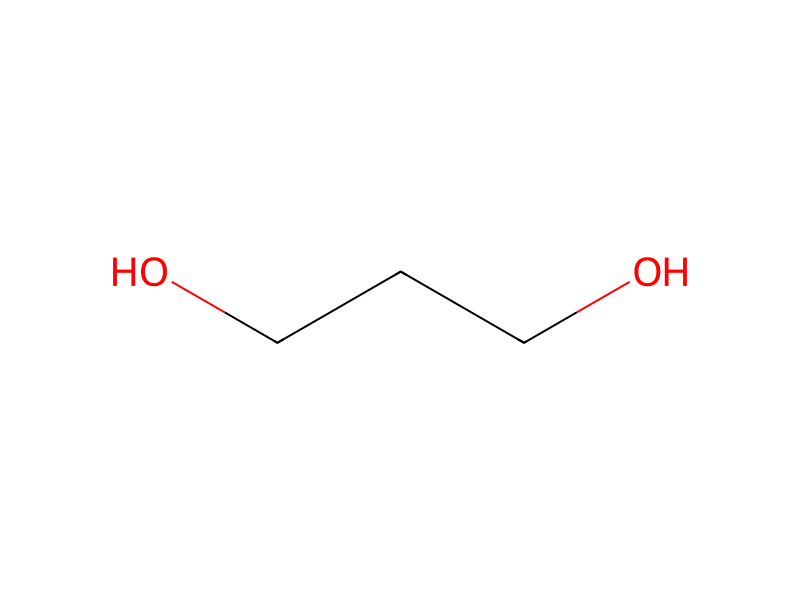

Product 1

Reagents, catalysts & solvents 1

Procedure
Crude (4-Nitrobenzyl)phosphonic dichloride (Compound 230E) above was dissolved in anhydrous THF (20 mL). To this solution was added TEA (840 mg, 7.5 mmol) and 1,3-propane-diol (190 mg, 2.5 mmol) at 0° C. The resulting mixture was stirred at room temperature overnight, concentrated and the residue was purified by column chromatography to give the target product (70 mg). 1H NMR (CD3OD, 400 MHz): δ=2.85 (d, J=20.0 Hz, 2H), 3.28-3.30 (m, 2H), 3.55-3.58 (m, 2H), 3.75-7.78 (m, 2H), 6.64 (d, J=8.4 Hz, 2H), 7.07 (d, J=8.4 Hz, 2H).
Workup
- concentrationconcentrated
- customthe residue was purified by column chromatography
Sources & evidence
- ORD record
- ord-e7f0eb4f59a44fde989c8c315c1893cf
- Source dataset
- uspto-grants-2013_03
- Patent number
- US08399433B2
Reaction notes
Loading…