Triethylamine → 2-(Pivaloylamino)pyridine
Reaction equation

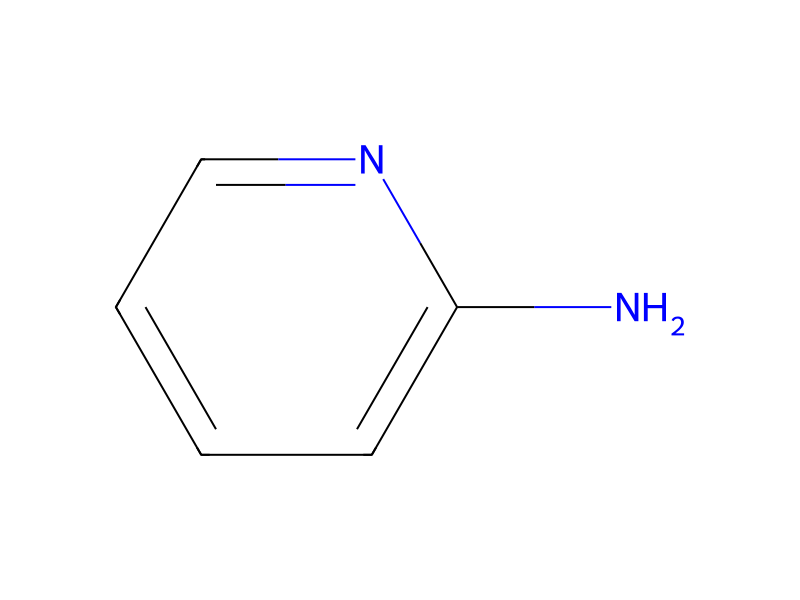
[NH2:1][C:2]1[CH:7]=[CH:6][CH:5]=[CH:4][N:3]=1.CCN(CC)CC.[CH3:15][C:16]([CH3:21])([CH3:20])[C:17](Cl)=[O:18]>C(Cl)Cl>[N:3]1[CH:4]=[CH:5][CH:6]=[CH:7][C:2]=1[NH:1][C:17](=[O:18])[C:16]([CH3:21])([CH3:20])[CH3:15]Participants
Reactant 3


Product 1

Reagents, catalysts & solvents 1

Conditions
- Temperature
- -5 °C
Procedure
2-Aminopyridine (25.00 g, 265.6 mmole) was taken up under nitrogen in DCM (425 ml) and NEt3 (46.00 ml, 332 mmole) was added. The solution was cooled to −5° C., a solution of trimethyl acetyl chloride (35.95 ml, 292.20 mmole) in DCM (50 ml) was added dropwise and the mixture was stirred for a further 15 minutes at −5° C. The mixture was then stirred for 2 hours at RT. The suspension was washed with H2O (200 ml), then with dilute NaHCO3 solution, and the organic phase was dried over MgSO4. After filtering off the drying agent and removing the solvent on a rotary evaporator, the residue (48.30 g) was recrystallised from hexane (100 ml) at boiling heat. N-(pyridin-2-yl)pivalamide (42.80 g, 91%) was obtained in the form of colourless crystals.
Workup
- stirringThe mixture was then stirred for 2 hours at RT
- washThe suspension was washed with H2O (200 ml)
- dry with materialwith dilute NaHCO3 solution, and the organic phase was dried over MgSO4
- filtrationAfter filtering off the drying agent
- customremoving the solvent
- customon a rotary evaporator
- customthe residue (48.30 g) was recrystallised from hexane (100 ml)
- temperatureat boiling heat
Sources & evidence
- ORD record
- ord-137818f27a61436ea291f32e3ba07601
- Source dataset
- uspto-grants-2013_03
- Patent number
- US08399503B2
Reaction notes
Loading…