Hydrochloric Acid → HCID 67199697, compound
Reaction equation

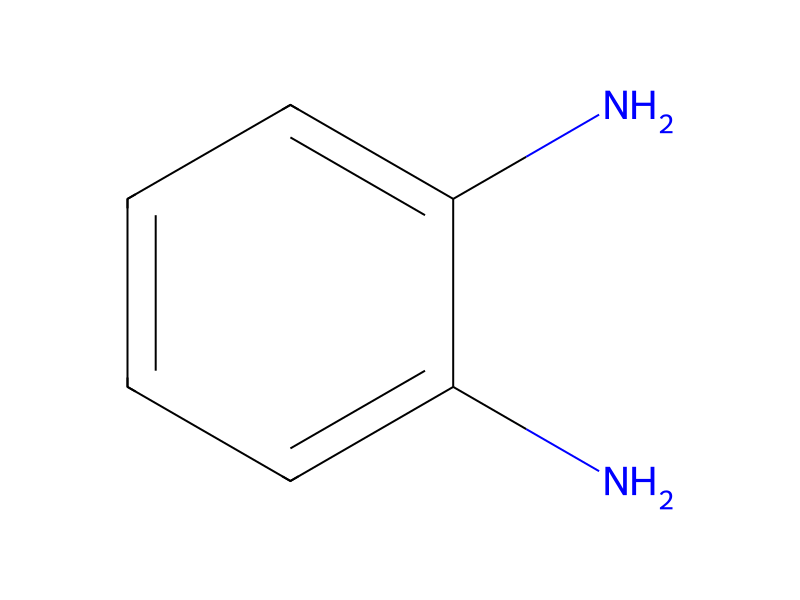
[C:1]1([NH2:8])[CH:6]=[CH:5][CH:4]=[CH:3][C:2]=1[NH2:7].[F:9][C:10]([F:23])([F:22])[C:11]1[CH:12]=[C:13]([C:17](=O)[C:18](=O)[CH3:19])[CH:14]=[CH:15][CH:16]=1.Cl>O>[CH3:19][C:18]1[C:17]([C:13]2[CH:14]=[CH:15][CH:16]=[C:11]([C:10]([F:9])([F:22])[F:23])[CH:12]=2)=[N:8][C:1]2[C:2](=[CH:3][CH:4]=[CH:5][CH:6]=2)[N:7]=1Participants
5
Reactant 3


Product 1

Reagents, catalysts & solvents 1

Conditions
- Temperature
- 60 °C
Procedure
A mixture of 1,2-phenylenediamine (1.00 g, 9.25 mmol) and 1-[3-(trifluoromethyl)phenyl]propane-1,2-dione (2.00 g, 9.25 mmol) in water (80 mL) was heated at 60° C. overnight, then for 5 h with vigorous stirring. The reaction mixture was allowed to cool to r.t. then acidified with 2N HCl (ca 20 mL) and extracted with EtOAc. The organic phase was washed with brine, dried (MgSO4) and concentrated in vacuo. The residue was triturated with heptane to give the title compound (1.44 g, 54%) as a cream-coloured solid. δH (CDCl3) 8.05-8.16 (m, 2H), 7.96 (s, 1H), 7.85-7.90 (m, 1H), 7.72-7.82 (m, 3H), 7.64-7.71 (m, 1H), 2.79 (s, 3H). LCMS (ES+) 289.3 (M+H)+, RT 4.21 minutes (Method 3).
Workup
- temperatureto cool to r.t.
- extractionextracted with EtOAc
- washThe organic phase was washed with brine
- dry with materialdried (MgSO4)
- concentrationconcentrated in vacuo
- customThe residue was triturated with heptane
Sources & evidence
- ORD record
- ord-16cdae4321d84f418651b33d63c88703
- Source dataset
- uspto-grants-2013_03
- Patent number
- US08399483B2
Reaction notes
Loading…