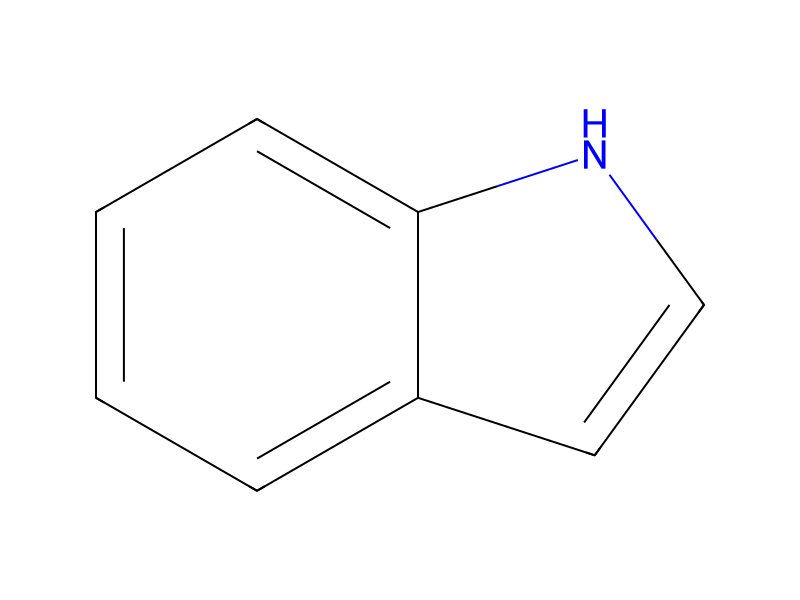
Indole → HCID 59238996, compound
Reaction equation

N1C2C(=CC=CC=2)C=C1.C([N:17]1[C:29]2[C:28]([O:30][CH2:31][CH2:32][CH2:33][CH2:34][CH2:35]Br)=[C:27]3[N:37](C(OC(C)(C)C)=O)[C:38]4[CH:39]=[CH:40][C:41]([Br:44])=[CH:42][C:43]=4[C:26]3=[CH:25][C:24]=2[C:23]2[C:18]1=[CH:19][CH:20]=[C:21]([Br:52])[CH:22]=2)(OC(C)(C)C)=O.[NH:53]1[CH2:58][CH2:57][O:56][CH2:55][CH2:54]1>>[Br:44][C:41]1[CH:42]=[C:43]2[C:38](=[CH:39][CH:40]=1)[NH:37][C:27]1[C:28]([O:30][CH2:31][CH2:32][CH2:33][CH2:34][CH2:35][N:53]3[CH2:58][CH2:57][O:56][CH2:55][CH2:54]3)=[C:29]3[NH:17][C:18]4[CH:19]=[CH:20][C:21]([Br:52])=[CH:22][C:23]=4[C:24]3=[CH:25][C:26]2=1Participants
4



Procedure
The title compound was prepared in a manner analogous to Example 70 except the starting indole is 5,7-diBOC-2,10-dibromo-6-(5-bromopentyloxy)indolo[2,3-b]carbazole and the reagent is morpholine. 1H-NMR (400 MHz, acetone-d6) δ ppm 8.68 (s, 1 H), 8.32 (d, J=2.4 Hz, 2 H), 7.48-7.41 (m, 4 H), 4.34 (t, J=6.8 Hz, 2 H), 3.56 (t, J=4.8 Hz, 4 H), 2.39-2.23 (m, 6 H), 1.98-1.87 (m, 2 H), 1.60-1.44 (m, 4 H); MS (ESI) m/z 584.1 (M−H)−
Sources & evidence
- ORD record
- ord-5a3309cc87c04604881477683d736e1d
- Source dataset
- uspto-grants-2013_03
- Patent number
- US08399502B2
Reaction notes
Loading…