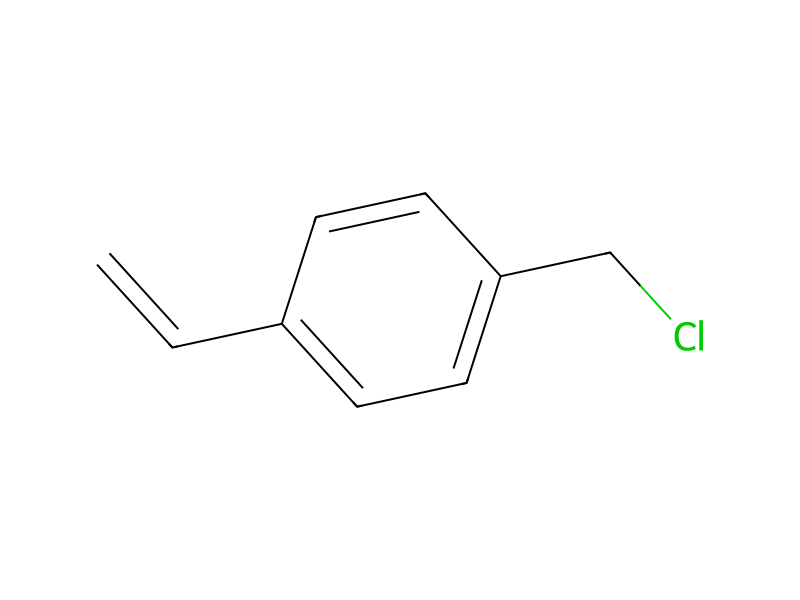
p-Vinylbenzyl chloride → Tetramethyl 4-vinylbenzyl-methanebisphosphonate
Reaction equation

[CH:1]([C:3]1[CH:10]=[CH:9][C:6]([CH2:7]Cl)=[CH:5][CH:4]=1)=[CH2:2].[CH2:11]([P:18]([O:22][CH3:23])(=[O:21])[O:19][CH3:20])[P:12]([O:16][CH3:17])(=[O:15])[O:13][CH3:14]>>[CH:1]([C:3]1[CH:10]=[CH:9][C:6]([CH2:7][CH:11]([P:12]([O:13][CH3:14])(=[O:15])[O:16][CH3:17])[P:18]([O:22][CH3:23])(=[O:21])[O:19][CH3:20])=[CH:5][CH:4]=1)=[CH2:2]Participants
3


Procedure
Following the General Synthetic Procedure B, 4-vinylbenzylchloride is reacted with tetramethyl methanebisphosphonate to produce tetramethyl 4-vinylbenzyl-methanebisphosphonate that is then hydrolyzed to yield 4-vinylbenzyl-methanebisphosphonic acid.
Sources & evidence
- ORD record
- ord-4cfd5d2550c4418e9b3e2111d1a00cce
- Source dataset
- uspto-grants-2013_03
- Patent number
- US08404144B2
Reaction notes
Loading…