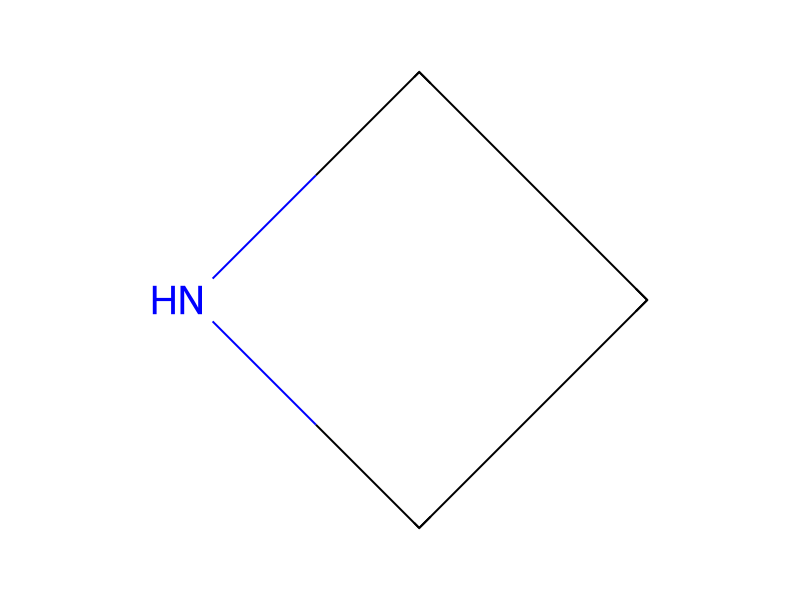
Azetidine → HCID 68682086, compound
Reaction equation

Br[C:2]1[CH:3]=[CH:4][C:5]([N+:8]([O-:10])=[O:9])=[N:6][CH:7]=1.C(=O)([O-])[O-].[Cs+].[Cs+].[NH:17]1[CH2:20][CH2:19][CH2:18]1>C1(P([C-]2C=CC=C2)C2C=CC=CC=2)C=CC=CC=1.[C-]1(P(C2C=CC=CC=2)C2C=CC=CC=2)C=CC=C1.[Fe+2].C([O-])(=O)C.[Pd+2].C([O-])(=O)C.C1(C)C=CC=CC=1>[N:17]1([C:2]2[CH:3]=[CH:4][C:5]([N+:8]([O-:10])=[O:9])=[N:6][CH:7]=2)[CH2:20][CH2:19][CH2:18]1Participants





Conditions
- Temperature
- 105 °C
Procedure
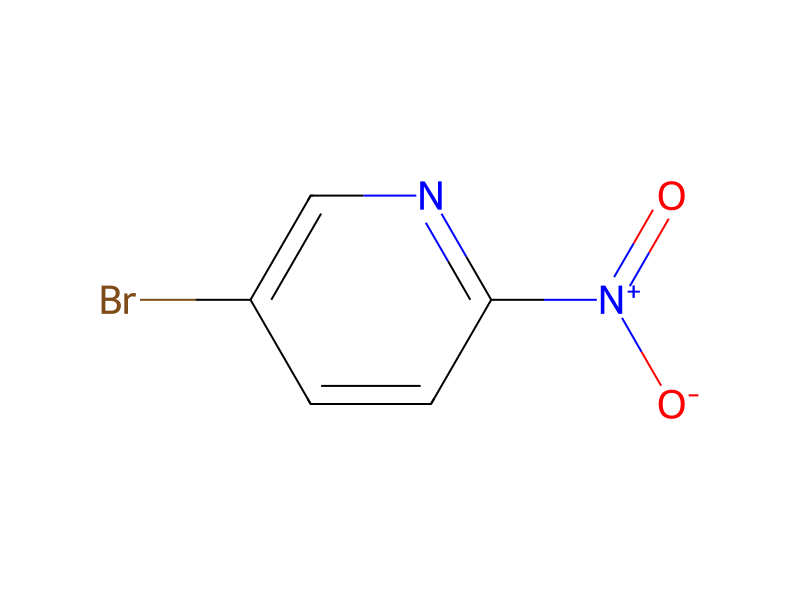
1 g of 5-bromo-2-nitropyridine, 3.5 g of cesium carbonate, 825 mg of bis(diphenylphosphino)ferrocene, 110 mg of palladium acetate and 15 ml of toluene are charged to a microwave tube and then 424 mg of azetidine are added. The tube is stirred and heated in a bath at 105° C., and then left at ambient temperature for 16 h. The reaction mixture is filtered and the solid is rinsed with dichloromethane. The combined filtrates are concentrated to dryness under reduced pressure and the residue is chromatographed on a silica cartridge, elution being carried out with dichloromethane. The fractions comprising the expected product are combined and concentrated to dryness under reduced pressure to give 550 mg of 5-(azetidin-1-yl)-2-nitropyridine in the form of a yellow solid.
Workup
- filtrationThe reaction mixture is filtered
- washthe solid is rinsed with dichloromethane
- concentrationThe combined filtrates are concentrated to dryness under reduced pressure
- customthe residue is chromatographed on a silica cartridge, elution
- concentrationconcentrated to dryness under reduced pressure
Sources & evidence
- ORD record
- ord-0ac82b7cae884cc684dcfc8247a8ee11
- Source dataset
- uspto-grants-2013_03
- Patent number
- US08404848B2
Reaction notes
Loading…