L-Tartaric acid → 2,3-Dihydroxybutanedioic Acid
Reaction equation

[CH3:1][C@H:2]([N:9]1[CH2:12][CH2:11][CH:10]1[C:13]([O:15][CH3:16])=[O:14])[C:3]1[CH:8]=[CH:7][CH:6]=[CH:5][CH:4]=1.[C:17]([OH:26])(=[O:25])[C@@H:18]([C@H:20]([C:22]([OH:24])=[O:23])[OH:21])[OH:19]>CO>[C:17]([OH:26])(=[O:25])[CH:18]([CH:20]([C:22]([OH:24])=[O:23])[OH:21])[OH:19].[CH3:1][C@H:2]([N:9]1[CH2:12][CH2:11][CH:10]1[C:13]([O:15][CH3:16])=[O:14])[C:3]1[CH:8]=[CH:7][CH:6]=[CH:5][CH:4]=1Participants
5
Reactant 2
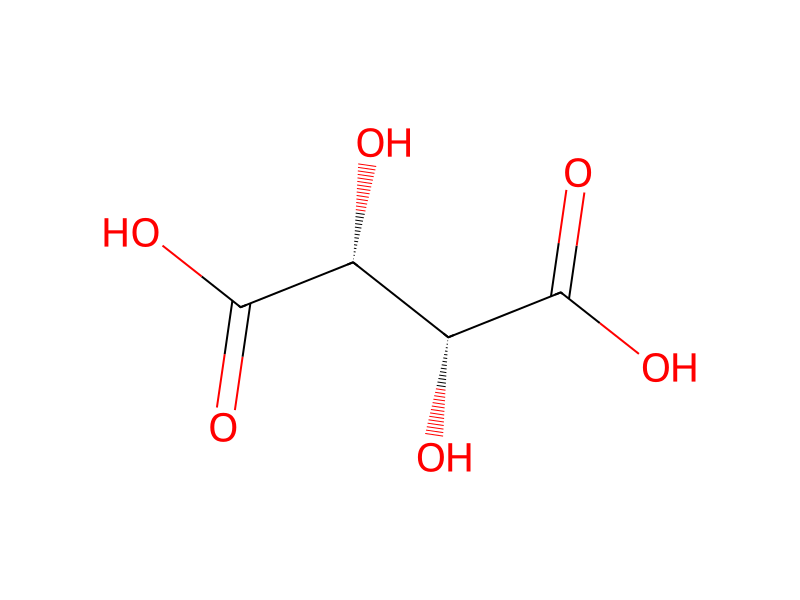

Product 2

Reagents, catalysts & solvents 1

Procedure
Methyl N-[(S)-methylbenzyl]azetidine-2-carboxylate (0.27 g, the ratio: 2S isomer/2R isomer=52/48) and L-tartaric acid (0.15 g) were dissolved in methanol (6 ml) at room temperature. Then, the mixture was concentrated to give tartaric acid salt of methyl N-[(S)-methylbenzyl]azetidine-2-carboxylate, which was recrystallized from a mixed solvent of methyl tert-butyl ether (6 ml) and methanol (2 ml) to give crystals of tartaric acid salt of methyl N-[(S)-methylbenzyl]azetidine-2-(S)-carboxylate (0.12 g, colorless crystals, yield: 28%).
Workup
- concentrationThen, the mixture was concentrated
Sources & evidence
- ORD record
- ord-d861aff19311492db37cf5fe6da289f7
- Source dataset
- uspto-grants-2000_09
- Patent number
- US06114543
Reaction notes
Loading…